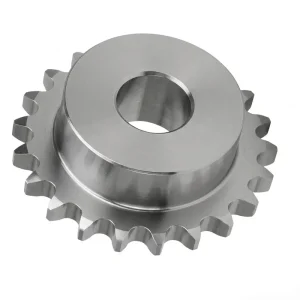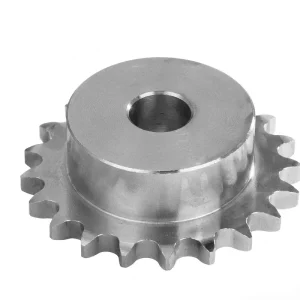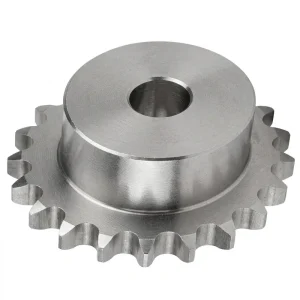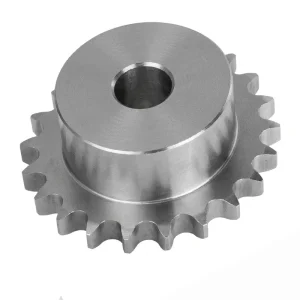
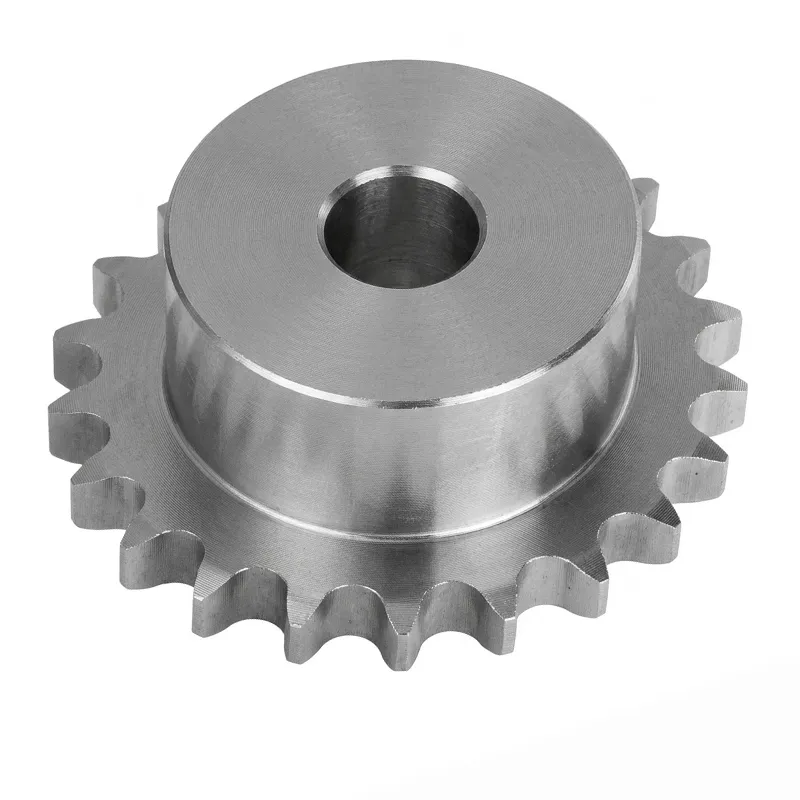
Piñones europeos EP-1/4″×1/8″
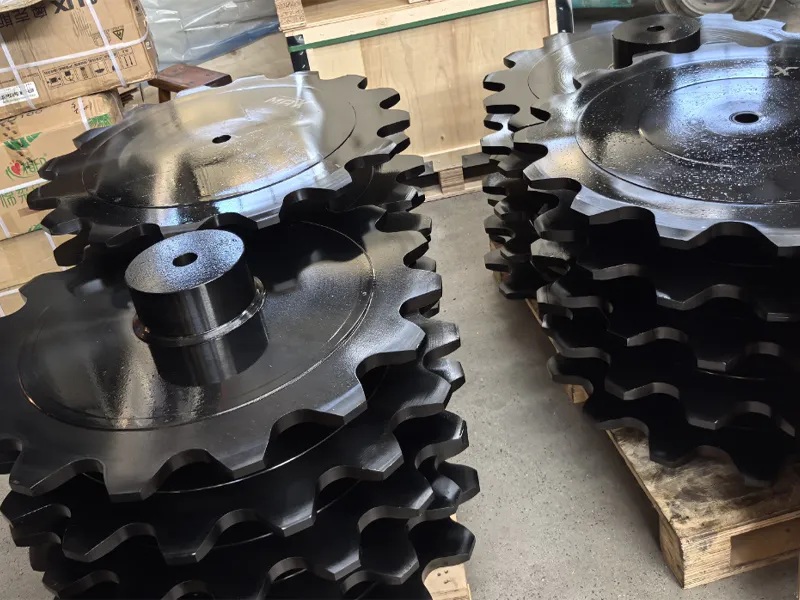
The EP-1/4″×1/8″ belongs to the ASA25 designation within our European Standard Sprockets Series — a family of roller chain sprockets engineered to meet the exacting tolerances required by DIN 8187 and ISO/R 606. With a pitch of 6.35 mm, an internal chain width of 3.18 mm, and a roller diameter of 3.3 mm, this sprocket series is purpose-built for precision light-duty drive systems where consistent engagement, minimal elongation under load, and dimensional repeatability are non-negotiable.
Available in a comprehensive tooth count range from Z=8 through Z=125, buyers can select the exact pitch diameter and hub configuration required for their equipment.
European Standard Sprockets Series
EP-1/4"×1/8" European Sprockets
Engineered to DIN 8187 and ISO/R 606 standards, our 1/4"×1/8" (ASA25) European Sprockets deliver reliable, low-maintenance power transmission for light-duty industrial and precision applications. Whether you are sourcing a European sprocket for sale to retrofit existing machinery or building a new drive system from scratch, this series offers the dimensional accuracy and material quality demanded by global buyers — including industrial buyers across Colombia and throughout Europe.
1. Technical Specifications — ASA25 (1/4"×1/8") European Sprockets
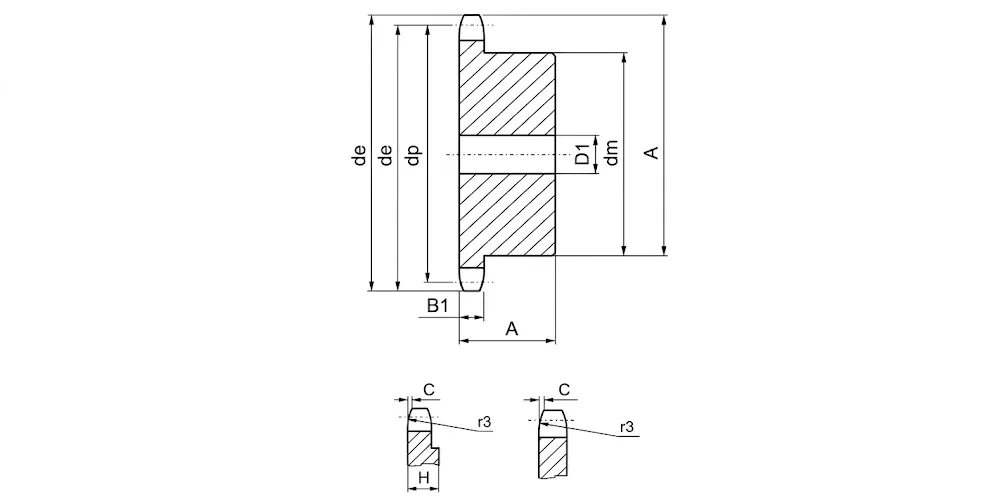
The table below lists dimensional data for the complete simplex sprocket range. Outer diameter (dₐ), pitch diameter (dₚ), boss diameter (Dₑ), bore (D₁), and hub width (A) are given in millimetres. Note: from Z=62 onward, plate width H increases to accommodate higher load ratings.
Tooth radius r₃: 6.4
Radius width C: 0.7
Tooth width B₁: 2.9
Pitch: 6.35
Internal width: 3.18
Roller Φ: 3.3
Chain acc. to DIN 8187
ISO/R 606
Designation: ASA25
| Z (Dientes) | dₐ (mm) | dₚ (mm) | Dₑ (mm) | D₁ (mm) | A (mm) |
|---|---|---|---|---|---|
| 8 | 19.4 | 16.58 | 10 | 6 | 12 |
| 9 | 21.4 | 18.56 | 11.5 | 6 | 12 |
| 10 | 23.3 | 20.55 | 13 | 6 | 12 |
| 11 | 25.3 | 22.54 | 15 | 8 | 13 |
| 12 | 27.3 | 24.53 | 17 | 8 | 13 |
| 13 | 29.3 | 26.53 | 17 | 8 | 13 |
| 14 | 31.3 | 28.53 | 17 | 8 | 13 |
| 15 | 33.3 | 30.53 | 20 | 8 | 13 |
| 16 | 35.3 | 32.55 | 22 | 8 | 14 |
| 17 | 37.3 | 34.55 | 22 | 8 | 14 |
| 18 | 39.4 | 36.56 | 25 | 8 | 14 |
| 19 | 41.4 | 38.58 | 25 | 8 | 14 |
| 20 | 43.4 | 40.58 | 25 | 8 | 14 |
| 21 | 45.4 | 42.60 | 30 | 8 | 14 |
| 22 | 47.4 | 44.62 | 30 | 8 | 14 |
| 23 | 49.4 | 46.63 | 30 | 8 | 14 |
| 24 | 51.4 | 48.64 | 30 | 8 | 14 |
| 25 | 53.5 | 50.66 | 30 | 8 | 14 |
| 26 | 55.5 | 52.67 | 30 | 8 | 14 |
| 27 | 57.5 | 54.69 | 30 | 8 | 16 |
| 28 | 59.5 | 56.71 | 30 | 8 | 16 |
| 30 | 63.6 | 60.75 | 30 | 8 | 16 |
| 35 | 73.6 | 70.84 | 30 | 8 | 16 |
| 40 | 83.7 | 80.93 | 30 | 8 | 16 |
| 45 | 93.8 | 91.03 | 40 | 10 | 18 |
| 50 | 103.9 | 101.13 | 40 | 10 | 18 |
| 57 | 118.1 | 115.27 | 40 | 10 | 18 |
| 60 | 124.1 | 121.32 | 50 | 10 | 20 |
| 65 | 134.2 | 131.43 | 50 | 10 | 20 |
| 72 | 148.4 | 145.58 | 50 | 10 | 20 |
| 75 | 154.4 | 151.63 | 50 | 10 | 20 |
| 80 | 164.5 | 161.74 | 70 | 10 | 30 |
| 90 | 184.7 | 181.95 | 70 | 10 | 30 |
| 100 | 204.9 | 202.15 | 70 | 10 | 30 |
| 114 | 233.2 | 230.45 | 70 | 10 | 30 |
| 120 | 245.4 | 242.58 | 70 | 10 | 30 |
| 125 | 255.5 | 252.68 | 70 | 10 | 30 |
Note: H=4 mm. From Z=62, the plate width H is increased. All dimensions in millimetres. Dimensions subject to manufacturing tolerances per DIN 8187.
2. Five Key Advantages of Our European Sprockets
① DIN 8187 / ISO/R 606 Verified Tooth Profile
Every European sprocket tooth is individually verified against DIN 8187 requirements. The 6.35 mm pitch, 3.18 mm internal width, and 3.3 mm roller diameter are held within tolerance on every production run — eliminating costly re-work when integrating European standard sprockets into existing drive trains.
② Full Z=8–125 Tooth Range in Stock
Unlike specialty suppliers who stock only popular tooth counts, we maintain inventory across the complete tooth range. This means procurement teams sourcing industrial sprockets and gears for replacement projects can match exact pitch diameters without bespoke lead times — keeping production lines moving.
③ CNC-Machined for Consistent Batch Accuracy
Our CNC machining centers eliminate the human variance found in conventional gear cutting. Tooth profile accuracy is documented to DIN 3961 / ISO 1328 quality levels, giving OEM engineers a traceable quality record for each European sprocket batch — a requirement increasingly enforced under CE machinery directives in the EU. Consistent CNC output also means that a replacement sprocket ordered months after an initial delivery will be dimensionally identical to the first.
④ Carbon Steel and Stainless Steel Options
Standard carbon steel European sprockets are heat-treated for surface hardness, while stainless steel European sprockets and gears are offered for wash-down environments, food processing, and pharmaceutical conveying lines. Material certificates are available on request, supporting compliance documentation for regulated industries. Both material grades share the same tooth geometry, so switching from carbon steel to stainless steel requires no adjustment to chain tension or centre distance.
⑤ Custom Bore, Keyway, and Hub Configurations
Standard bore sizes ship immediately. For OEM customers requiring specific hub diameters, stepped bores, or custom keyway configurations, our engineering team can supply a fully machined custom European sprocket to drawing within agreed lead times — with no minimum order quantity penalty on repeat designs.
3. How European Sprockets Work — Operating Principle
A roller chain sprocket transmits rotary motion and torque between a drive shaft and a driven shaft through a positive engagement mechanism. Unlike friction-based drives such as belt pulleys, European sprockets interlock mechanically with each chain roller, which sits in the tooth pocket and is pulled forward as the European sprocket rotates. This positive engagement eliminates slip and delivers a fixed velocity ratio that remains constant regardless of load fluctuation — a fundamental requirement in indexing, conveying, and synchronization applications.
In the ASA25 (1/4"×1/8") configuration, the 6.35 mm pitch chain wraps around the European sprocket with each roller seating precisely in the tooth gullet, defined by the tooth radius r₃ of 6.4 mm and the tooth gap geometry calculated per DIN 8187. As the sprocket rotates, the chain polygonal effect — a small, inherent velocity fluctuation — is minimized by selecting a higher tooth count where speed uniformity is critical. This is why our Z=8 through Z=125 range gives engineers the flexibility to balance sprocket diameter, rotational speed, and chordal velocity variation for each specific drive configuration.
Lubrication is a central factor in European sprocket service life. Although the 1/4"×1/8" size is classed as a light-duty chain, adequate grease or oil bath lubrication prolongs both European sprocket tooth and roller chain life significantly. In dry or semi-dry environments — common in food production and pharmaceutical lines — stainless steel European sprockets and gears with PTFE-compatible clearances are recommended, maintaining hygiene compliance without sacrificing dimensional precision.
4. Material Options and Surface Treatments
The standard material for our European Standard Sprockets is C45 medium-carbon steel, chosen for its balance of machinability, surface hardenability, and resistance to fatigue under cyclic tooth loading. After rough machining, each European sprocket undergoes induction hardening of the tooth flanks to achieve a surface hardness of HRC 45–55, while the core retains toughness to absorb shock loads. This dual-property profile is what roller chain sprockets require for long tooth life without brittleness.
For environments where corrosion is a design constraint — marine auxiliary drives, outdoor agricultural equipment, food-grade conveying lines — we offer sprockets manufactured from AISI 304 or AISI 316 stainless steel. Stainless steel European sprockets and gears do not require additional coatings and tolerate frequent wash-down cycles with alkaline detergents. A black oxide finish option is also available on carbon steel sprockets for customers seeking moderate corrosion resistance with minimal dimensional addition — useful when operating clearances are tight.
Plastic sprockets and gears represent a further alternative for ultra-light loads, noise-sensitive environments, or applications where metal-to-metal contact with the driven component is unacceptable. Our polymer-grade sprockets for the ASA25 pitch are manufactured from acetal (POM) or nylon 66, offering self-lubricating properties and chemical resistance appropriate for low-speed, low-torque drives in laboratory and packaging equipment.
5. Escenarios de aplicación
The 1/4"×1/8" European sprocket is chosen wherever compact, accurate drive transmission is required in a confined envelope. Below are the primary industry segments where this European sprocket series performs reliably.
Packaging and Labelling Machinery
High-speed carton erectors, blister pack feeders, and label applicators rely on the consistent pitch of European sprockets to synchronize multiple conveyor lanes. The small pitch diameter of the Z=8–16 European sprocket range allows tight centre-distance configurations inside machine frames where larger sprockets would not fit. Chain sprockets with verified DIN 8187 geometry eliminate phase drift between synchronized lanes, which would otherwise cause misalignment and product rejection.
Light Agricultural Equipment
Seed dispensers, small irrigation pump drives, and poultry feeding conveyors in the Colombian agricultural sector commonly use the ASA25 European sprocket in conjunction with matched roller chains. The European sprocket geometry handles the moderate shock loading of intermittent duty cycles, and the carbon steel construction tolerates the dusty, humid conditions typical of tropical farm environments. Replacement kettenrad zahnrader components for imported European-built equipment are frequently sourced from this series.
Food Processing Lines
Stainless steel variants of this European sprocket series are specified for portioning conveyors, filling machine indexers, and bottle-cap applicators where hygiene standards require all wetted metal components to be AISI 316 or equivalent. The tooth geometry is identical to the carbon steel range, allowing direct material substitution without altering chain tension or centre distances — an important consideration when validating food-grade production lines under HACCP or IFS certification requirements.
Medical and Pharmaceutical Equipment
Tablet counting machines, capsule filling lines, and laboratory automation systems use the small-pitch European sprocket for its precise indexing characteristics. In these applications, dimensional repeatability from batch to batch is a regulatory requirement — not merely a quality preference. Our CNC-verified European sprocket profiles meet the repeatability needed to maintain synchronization over multi-shift production runs without requiring mid-run adjustments.
Bicycle and Light Transportation Drives
The 1/4"×1/8" pitch is the standard for single-speed track bicycles, fixed-gear city bikes, and certain utility tricycles. Bike chainrings matching the kettenrad zahnrader specification in this pitch require exact tooth form to mesh with ISO/R 606 chains without premature wear. Our Z=13–25 range covers the rear cog sizes most commonly fitted to single-speed drivetrains, and our Z=40–52 range serves front chainring replacements where OEM components have worn out of tolerance.
Automation and Robotics Sub-Assemblies
Pick-and-place robots, coordinate-motion gantries, and servo-driven positioning systems often incorporate the small-pitch European sprocket for axis translation. European standard sprockets in the Z=17–30 range offer an ideal balance of compact pitch diameter and adequate tooth strength for the repetitive, high-cycle-count demands of automation equipment. The tight dimensional tolerances of our CNC-machined components reduce backlash, which is directly related to positioning repeatability.
6. Applicable Standards and Regulatory Considerations
Industrial chains and sprockets used in Europe must conform to harmonised technical standards that support compliance with EU machinery safety legislation. The following regulatory framework applies to procurement decisions for European sprockets across key markets.
EU Machinery Directive 2006/42/EC
Transmission components including European sprockets and chain drives installed in machinery placed on the EU market must be designed and manufactured to meet the essential health and safety requirements of this Directive. Selecting DIN 8187 / ISO/R 606 conformant European sprockets is a key step in achieving CE marking for the host machine.
DIN 8187 / ISO/R 606 (Europe)
The governing dimensional standard for short-pitch precision roller chains and their European sprockets in the European market. Sprocket tooth profiles, tolerances, and material documentation are verified to this standard across our entire European Standard Sprockets Series.
Colombia — Icontec NTC Standards
In Colombia, mechanical transmission components for use in regulated industries (food processing, pharmaceuticals, mining) may be subject to Icontec NTC standards or direct adoption of ISO equivalents. Colombian buyers sourcing a European sprocket for industrial equipment should verify that the applicable NTC standard is satisfied — in most cases, ISO/R 606 conformance is accepted as equivalent.
Germany — DIN Standards and DGUV Regulations
In Germany, the Deutsche Gesetzliche Unfallversicherung (DGUV) publishes technical rules for machinery safety, requiring that power transmission components meet the relevant DIN norm. Sprockets Germany suppliers must maintain dimensional documentation traceable to DIN 8187 and provide material certificates on request for European sprocket applications subject to occupational safety inspection.
Food Safety — EU Regulation (EC) 1935/2004
For food-contact applications, materials used in sprockets that may come into incidental contact with food products must comply with EU Regulation 1935/2004. Our AISI 316 stainless steel European sprockets meet the material suitability requirements for indirect food contact, supporting compliance documentation for food industry procurement teams.
RoHS and REACH (EU)
Carbon steel and stainless steel European sprockets are inherently RoHS compliant. For black oxide or other surface-treated components supplied into the EU, REACH SVHC substance declarations are available on request — supporting environmental compliance documentation required by EU industrial buyers and OEM manufacturers.
7. About Us
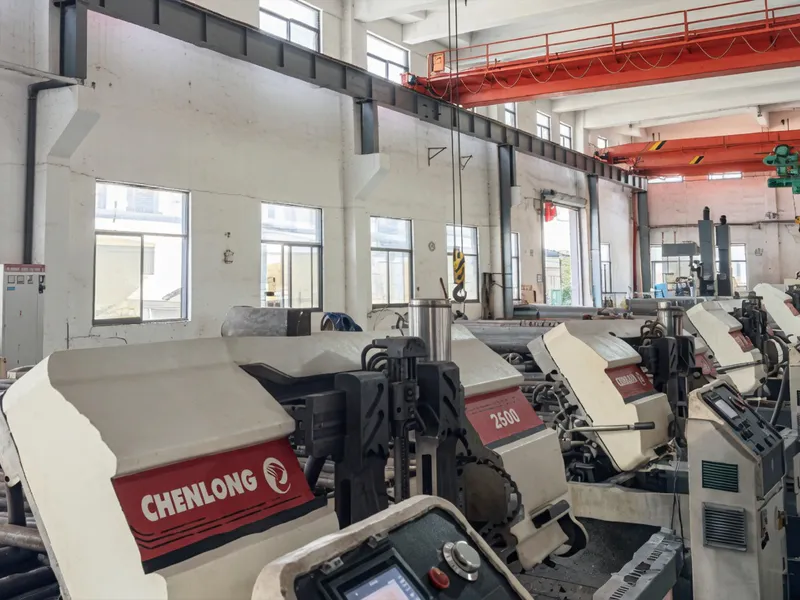
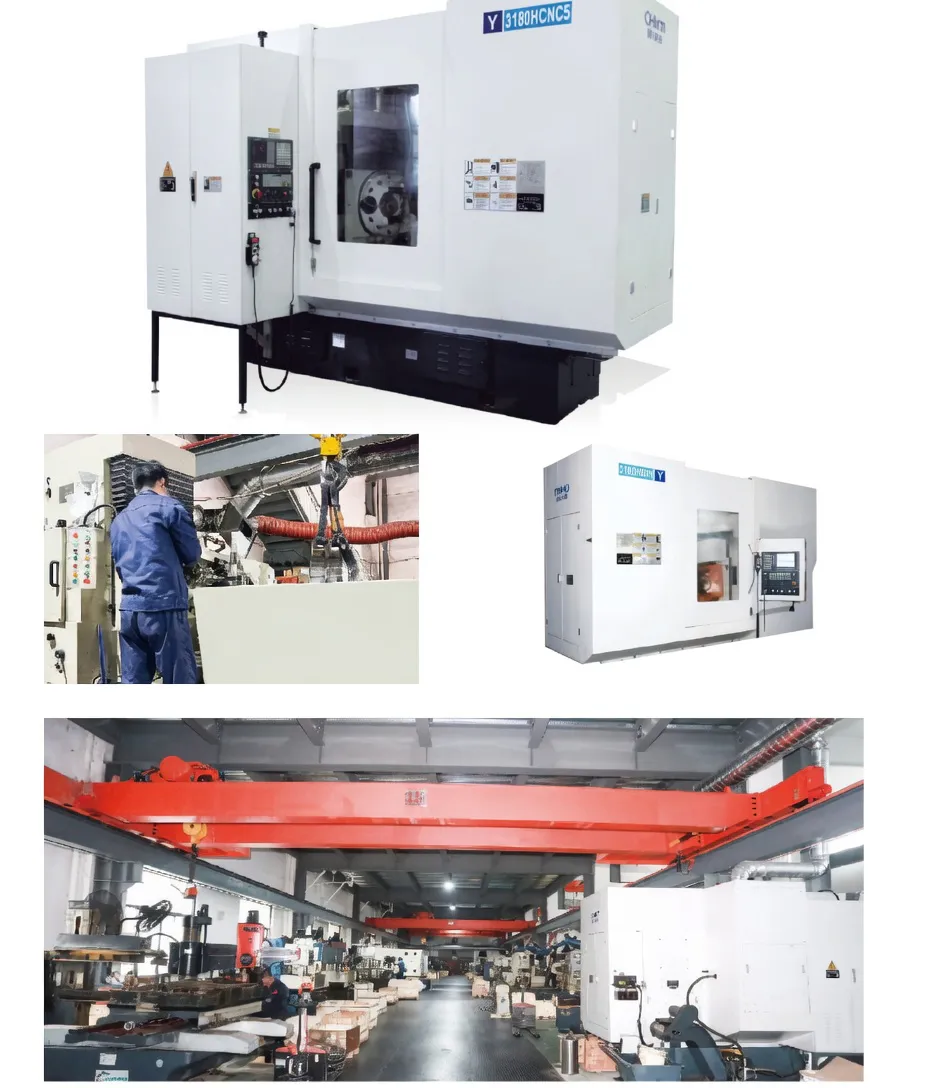
Operating since 2010, we are a dedicated manufacturer of roller chain sprockets and precision gears built to international standards. Our production floor is equipped with modern CNC machining centers, profile grinders, and coordinate measuring machines — a combination that keeps tooth profile tolerances across all European Standard Sprockets within DIN-specified limits on every production batch.
Tooth profiles on every sprocket leaving our facility are verified against DIN 8187, ANSI B29.1, or JIS B 1801, depending on which standard governs the application.
Our catalog spans the three major roller sprocket standards — European DIN/ISO, American ANSI/ASME, and Asian JIS — as well as a full gear range conforming to DIN 782, covering spur gears, bevel gears, and racks.
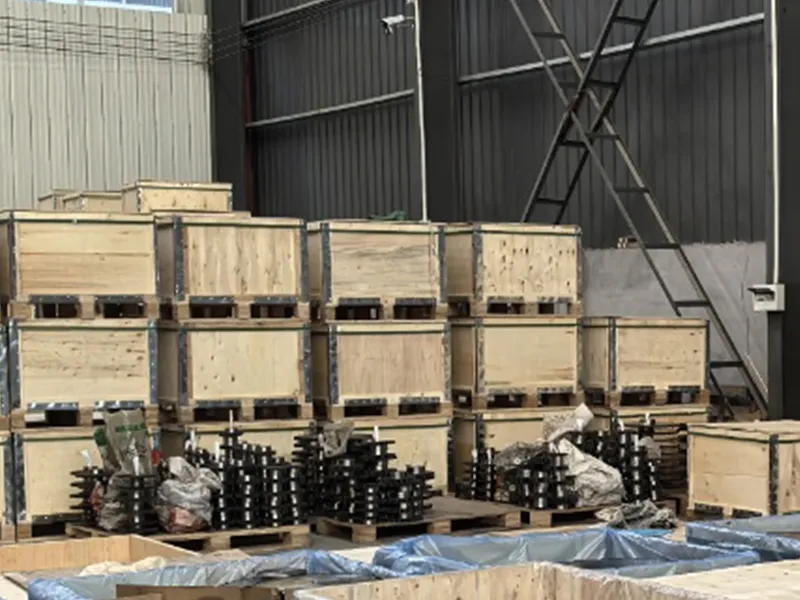
WorkShop
8. Compatible Drive System Components
European sprockets function as part of a complete drive system. To help you source everything from a single supplier, we also supply matched drive components that integrate directly with this European sprocket series. Combining compatible components from one source simplifies procurement, reduces lead time, and ensures dimensional compatibility without requiring cross-reference checks between multiple suppliers.
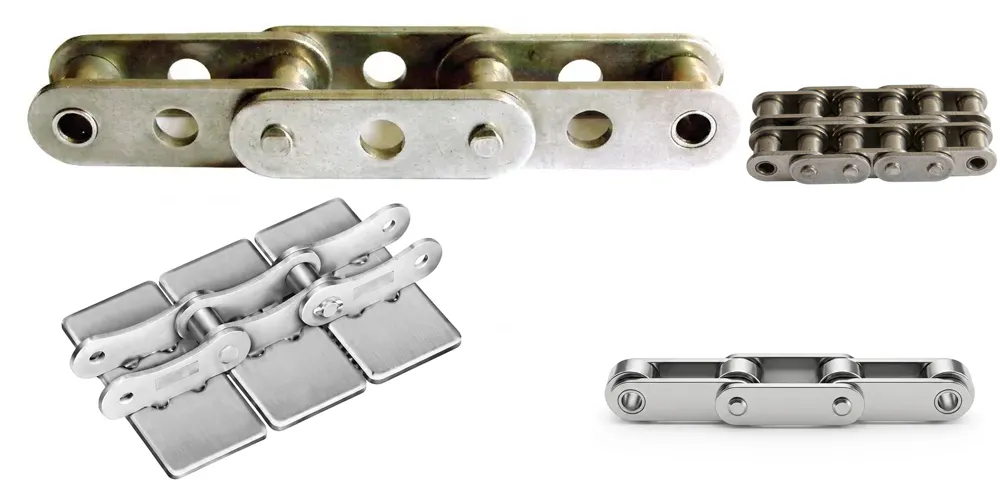
Cadena de rodillos
A matched roller chain is essential for realising the full service life of any European sprocket. Our chains conform to ISO/R 606 and DIN 8187, with pin, roller, and link plate dimensions manufactured to the same pitch tolerances as the sprockets they engage. For industrial buyers needing a complete sprockets and chains package, matched sets reduce commissioning time and eliminate the compatibility questions that arise from mixing components across brands.
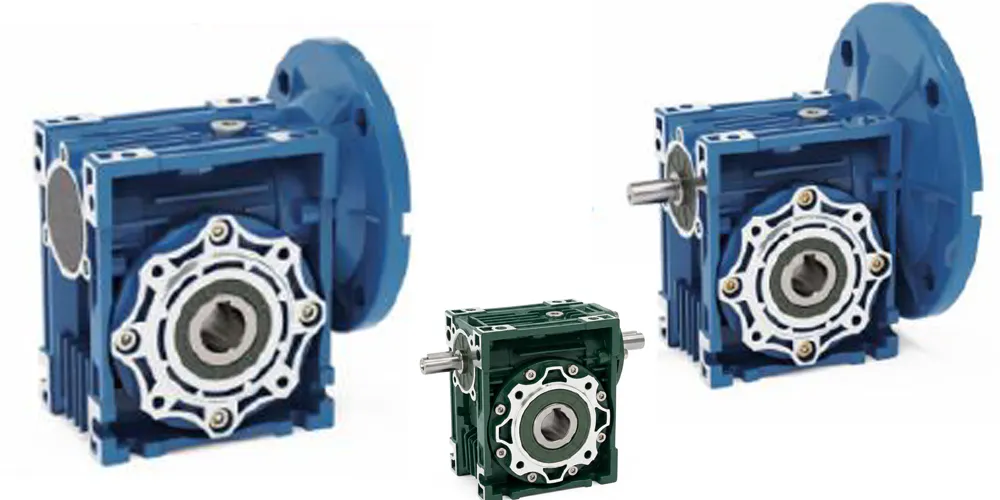
NMRV Worm Gear Reducer
Many European sprocket-driven conveyor and positioning systems are powered through a worm gear reducer to achieve the required output speed without oversizing the motor. Our NMRV reducers are manufactured to matching DIN standards and are available in a range of reduction ratios and flange configurations that accept standard motor frames. Specifying your European sprockets and NMRV reducer together allows our engineering team to verify that shaft diameters, keyways, and centre heights align before delivery — removing a frequent source of installation error.
Preguntas frecuentes
Editor: PXY