Built for Demanding Applications
Industrial Sprockets And Gears
3 Standards
EU / ANSI / Asian
500+ SKUs
Sprockets and Gears
80″ Max
Flame-Cut Diameter
3 Standards
EU / ANSI / Asian
Precision Sprockets And Gears Manufacturer
About Us
Since 2010
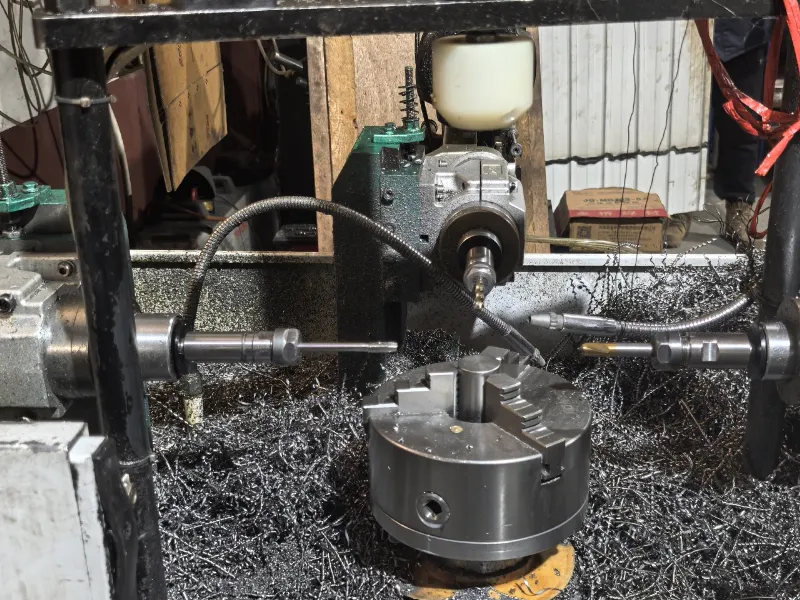
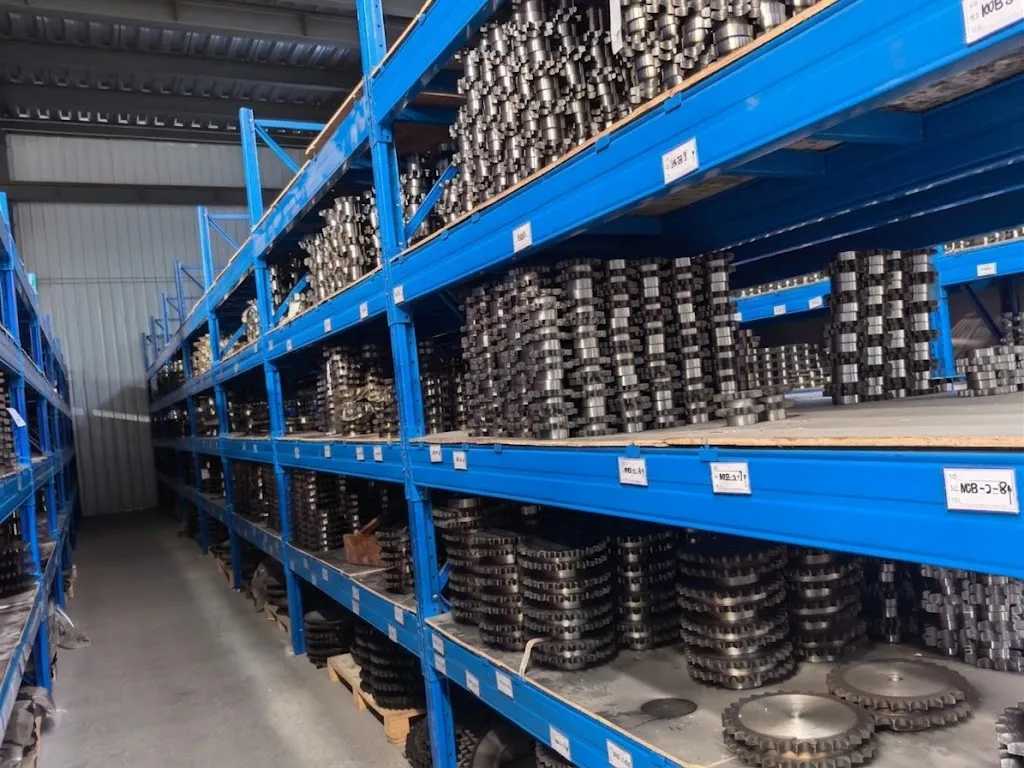
We are a manufacturer with decades of experience, dedicated to producing roller sprockets and gears that meet international standards. Our production facilities are equipped with CNC machining centers, ensuring that the tooth profile tolerances of all sprockets and gears meet DIN standard quality levels.
Each sprocket tooth profile is verified according to DIN 8187, ANSI B29.1, or JIS B 1801 (whichever is applicable). Gear tooth profile accuracy is documented according to DIN 3961 / ISO 1328 quality levels. We offer standard stock products for immediate shipment, as well as fully customized engineered components for OEM manufacturing and replacement parts projects.
Sprockets And Gears for Every Standard
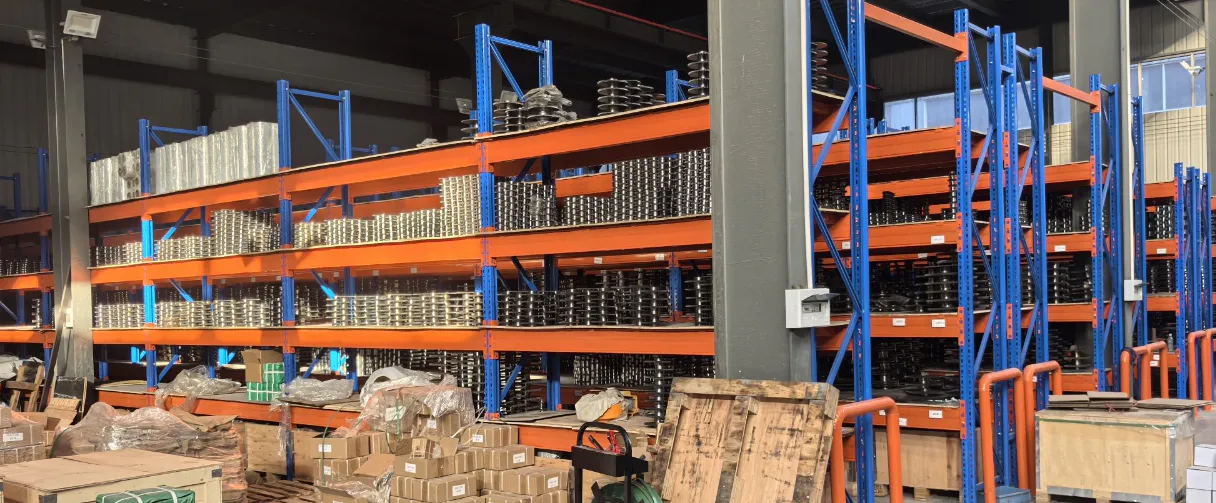
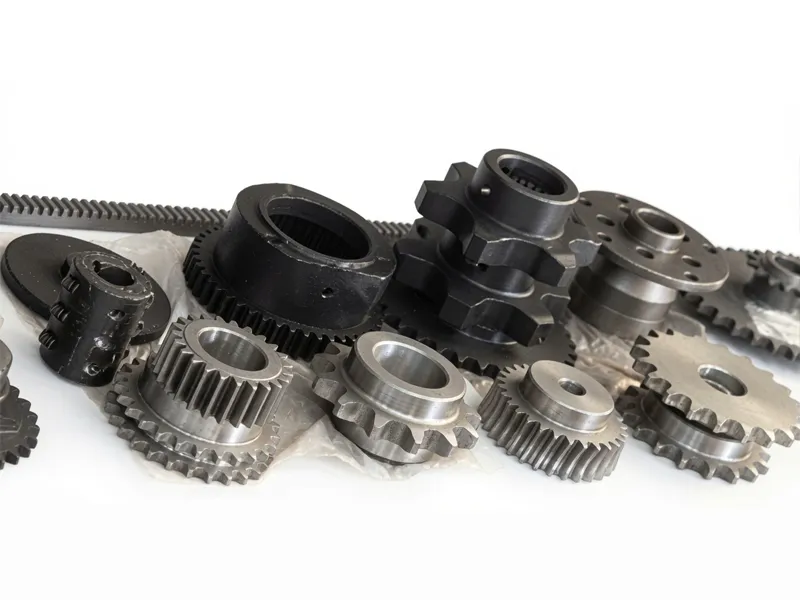
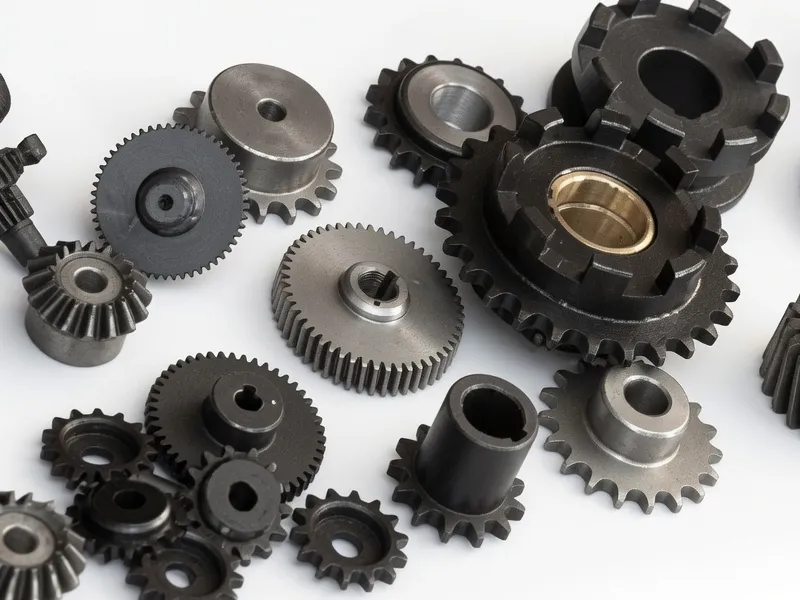
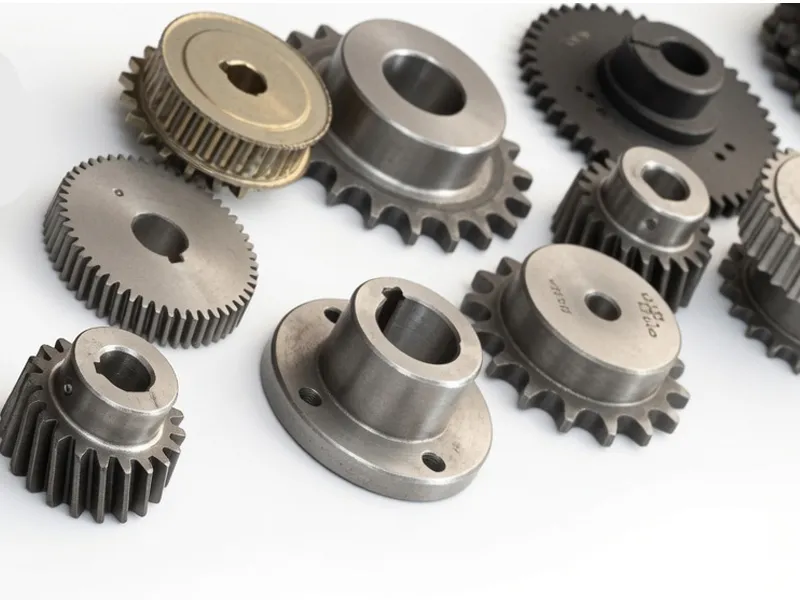
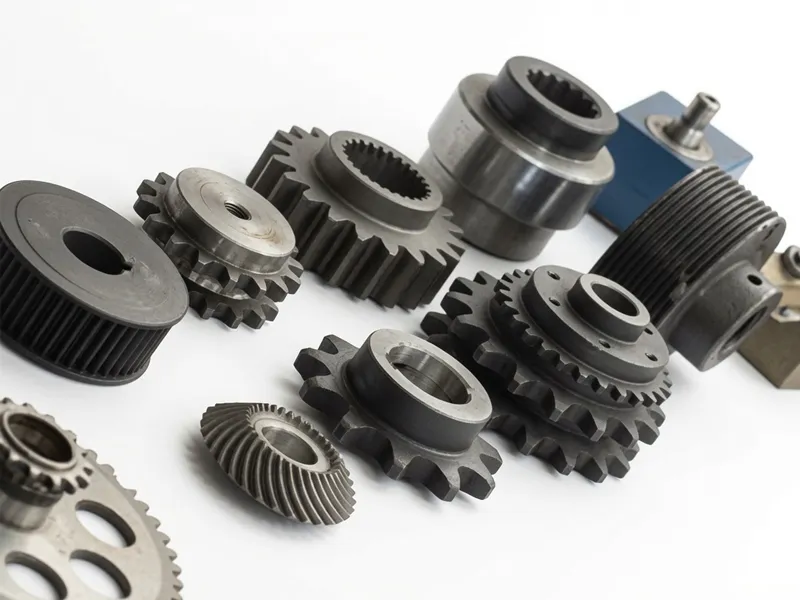
Whether your equipment follows European DIN, American ANSI, or Asian JIS specifications, our catalog covers the full spectrum of roller chain sprockets, gears, and racks.
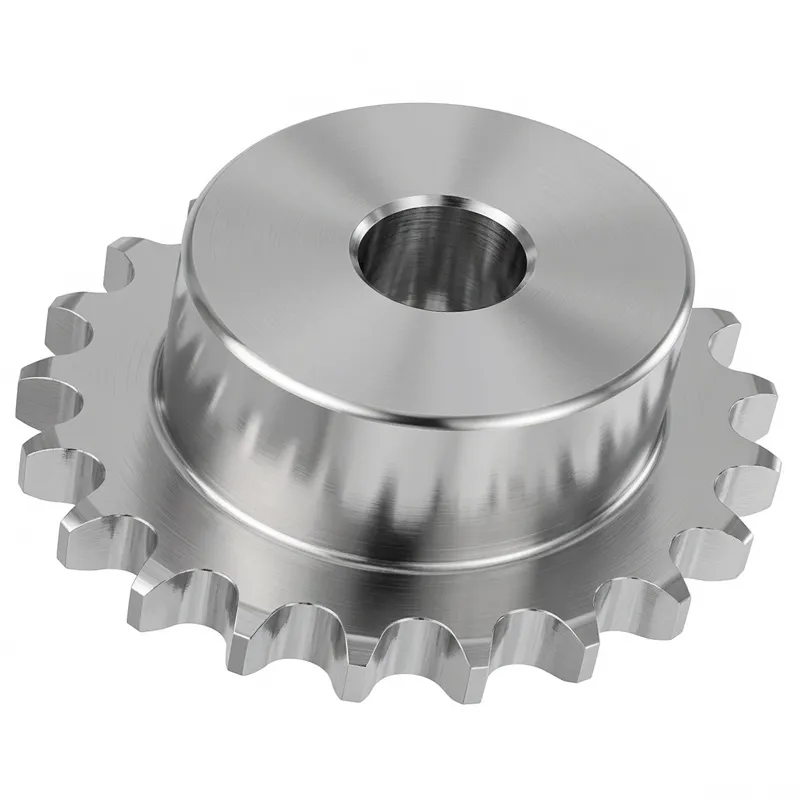
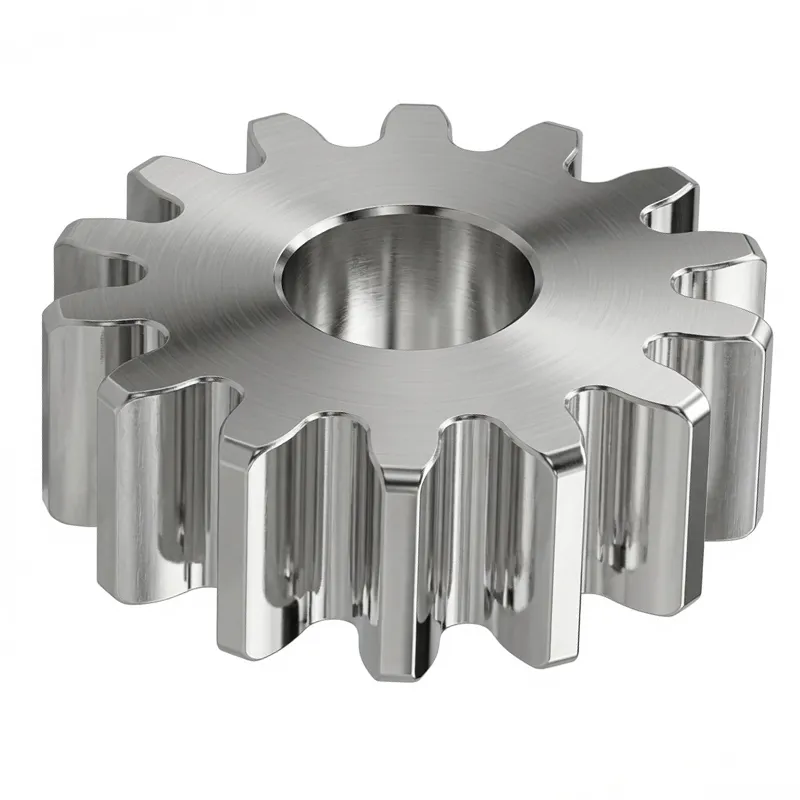
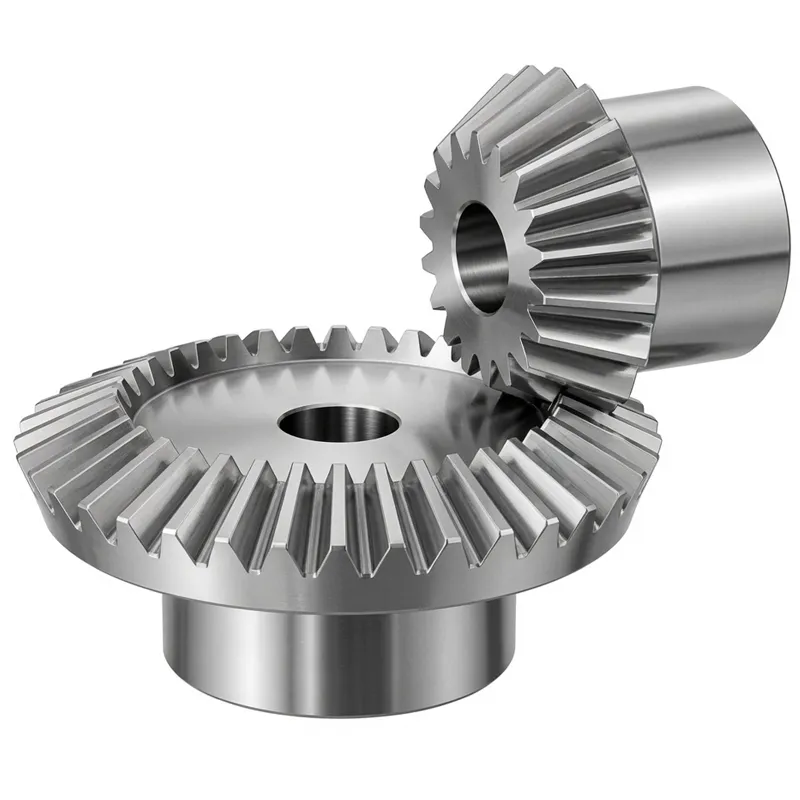
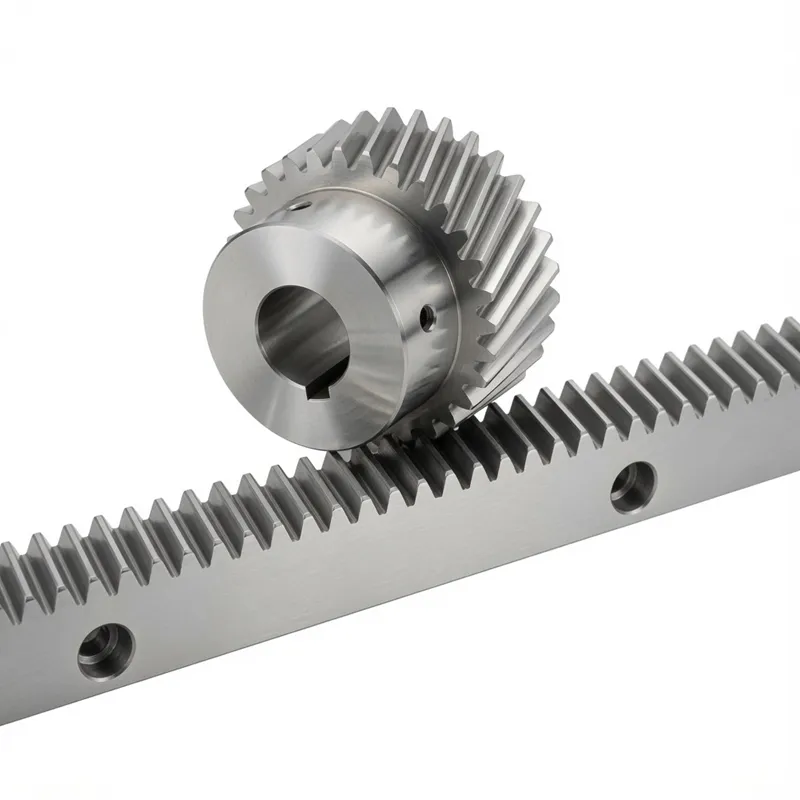
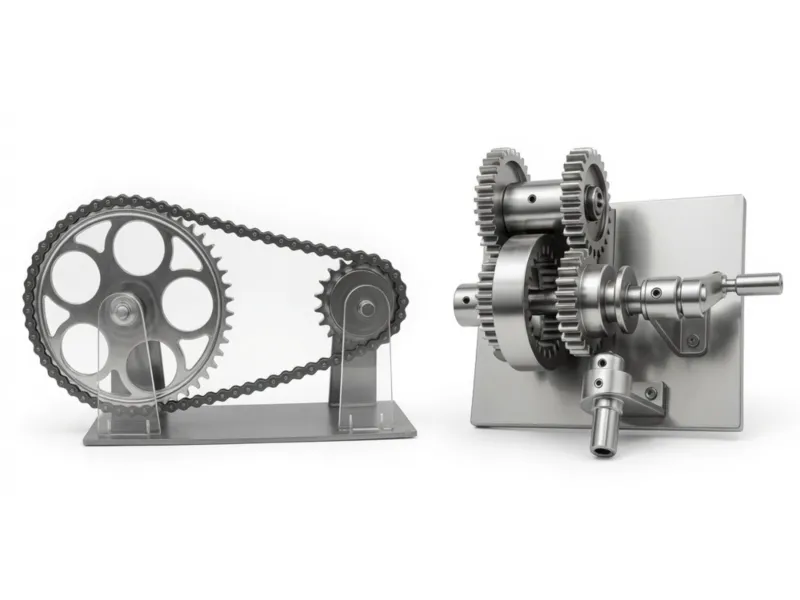
How Sprockets and Gears Transmit Power
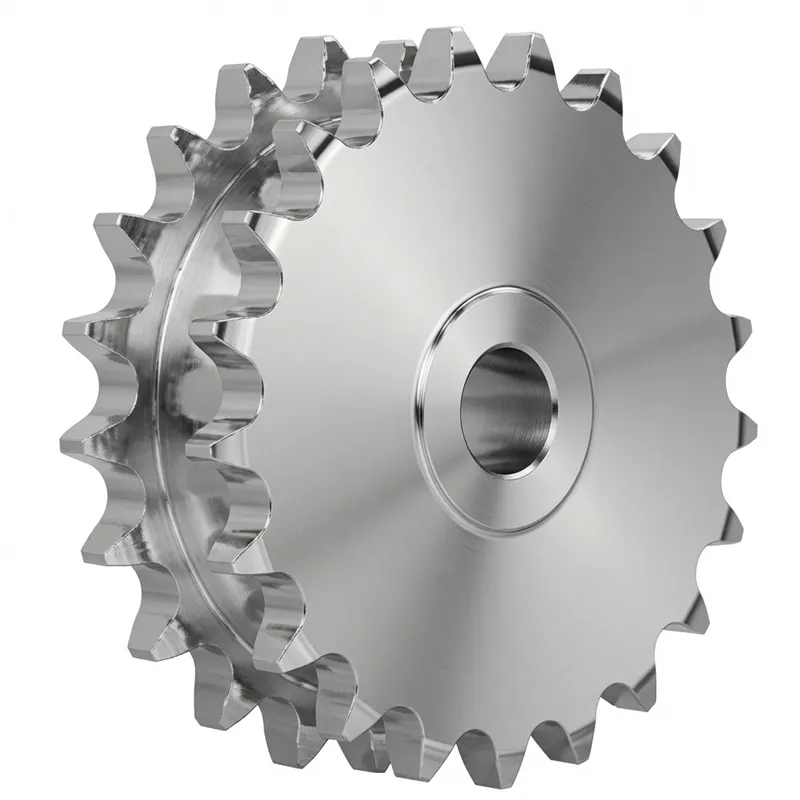
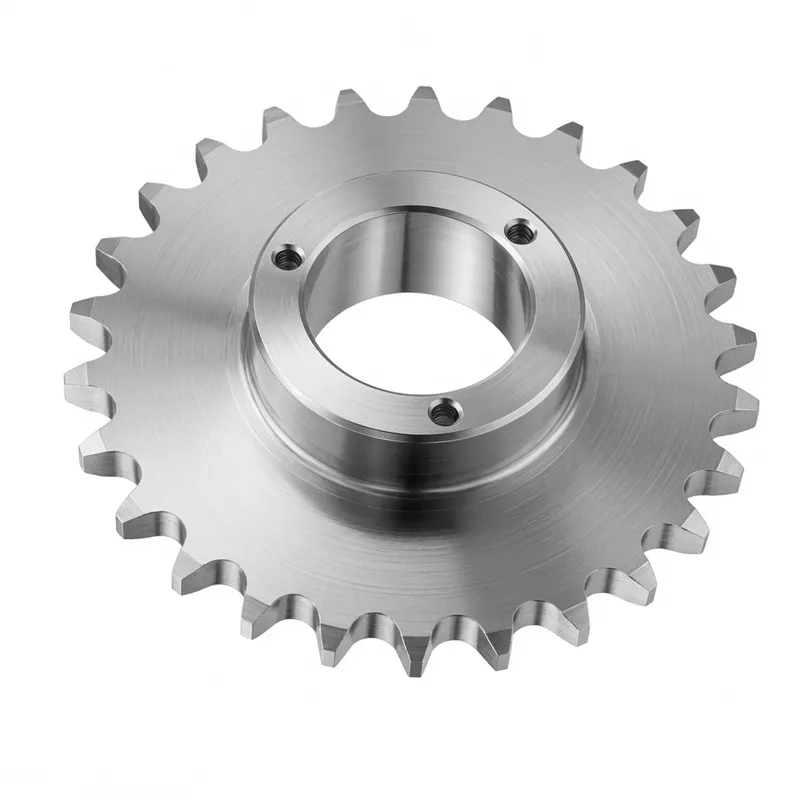
A sprocket is a toothed wheel that engages directly with the links of a roller chain, converting rotational motion into linear chain movement — or vice versa. Unlike gears, sprockets and chains allow for long-distance power transmission without slippage, making them the preferred choice in conveyors, agricultural drives, and industrial automation lines.
Gears, on the other hand, mesh directly with each other tooth-to-tooth. Spur gears transfer torque between parallel shafts, while bevel gears handle 90-degree shaft intersections. Racks convert rotary motion to linear movement — a combination used in CNC machine tool tables, steering systems, and actuators.
The pitch diameter of a sprocket is determined by its chain pitch and the number of teeth: dp = P / sin(180°/z). Correct tooth form — defined by standards like DIN 8187 and ANSI B29.1 — ensures that the chain roller seats cleanly in the pocket radius, distributing load across multiple teeth simultaneously and minimising wear.
Key formula: Pitch Diameter dp = P / sin(180°/z) — where P is chain pitch and z is tooth count
Material Options for Every Environment
Selecting the right material is as important as selecting the right tooth count. Here is how each alloy performs in real operating conditions.
C45 Carbon Steel
Standard GradeThe standard choice for the vast majority of sprockets and gears in our catalog. Medium-carbon steel with excellent machinability, heat treatability, and wear resistance. Ideal for general industrial environments with moderate loads.
Stainless Steel (304/316)
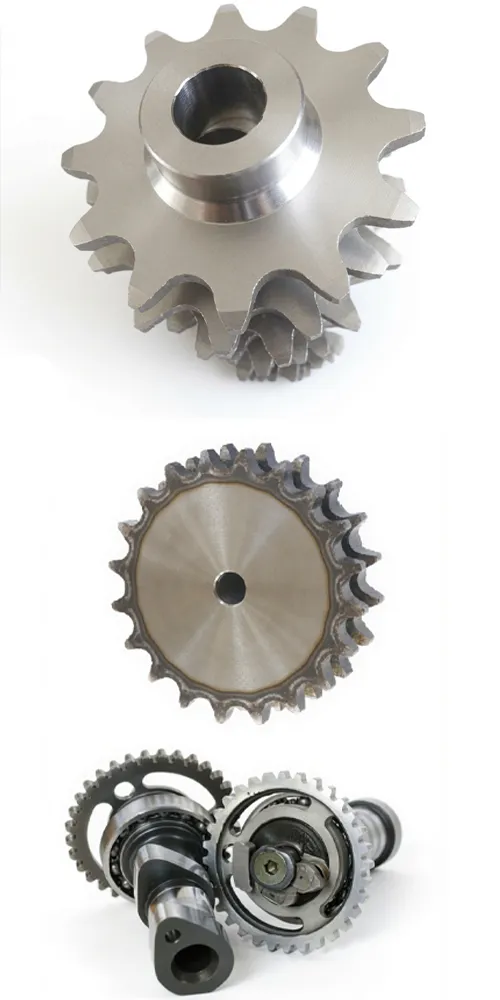
Corrosion ProofOur stainless steel sprockets and gears follow DIN 8187/ISO 606 profiles. 304 grade suits most standard corrosion-resistant needs, while 316 grade is optimized specifically for harsh chloride-exposed environments such as food processing, marine, and pharmaceutical handling.
Cast Iron
Damping KingPearlitic gray cast iron sprockets suit lower-speed, high-tonnage applications. The self-lubricating graphite microstructure dramatically reduces scuffing in intermittent or poorly lubricated drives while providing superior physical vibration damping.
Flame-Cut Plate Steel
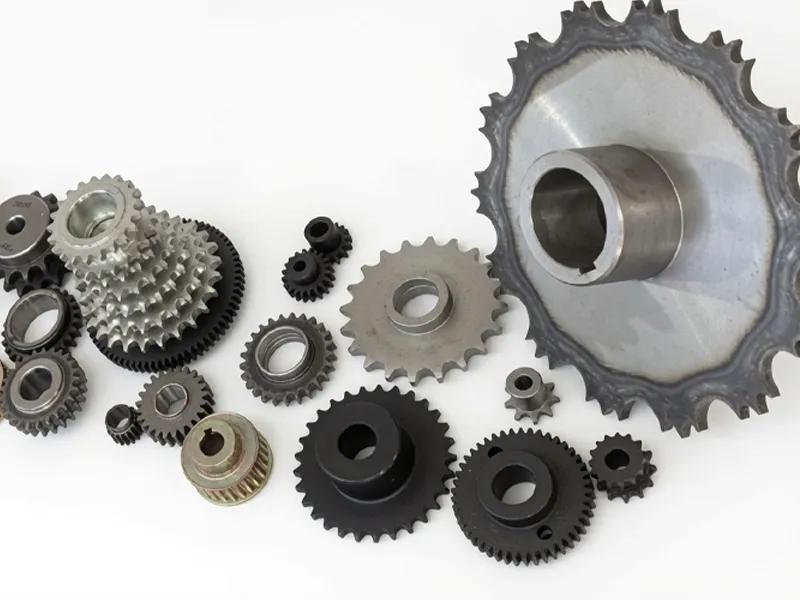
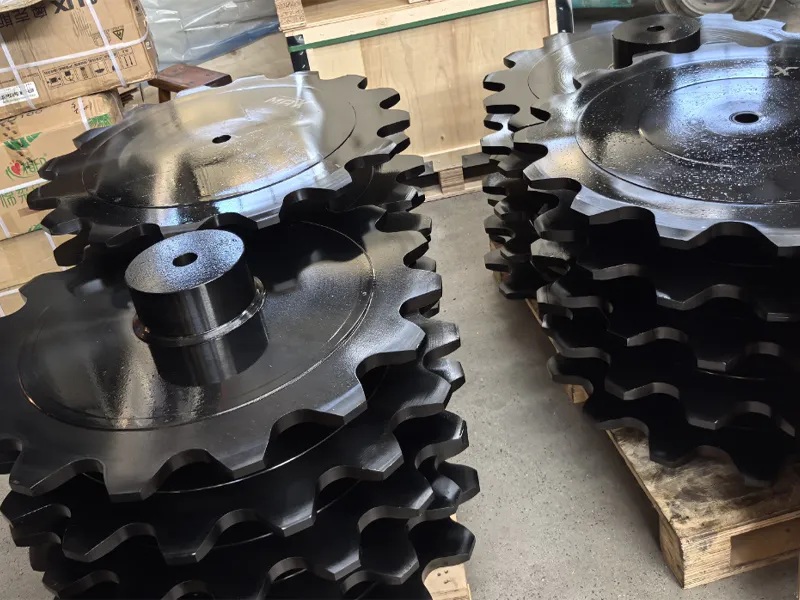
Heavy DutyFor large-pitch engineered conveying sprockets up to 80" (2,032 mm) in diameter. We supply custom flame-cut blanks from C1045 plate in FD, FT, FB, FPT, and FPB classifications. Teeth are CNC-milled and induction-hardened for extreme longevity.
How to Select the Right Sprocket or Gear
Identify Your Chain Standard
Confirm whether your existing chain follows DIN 8187/ISO 606 (European), ANSI B29.1 (American), or JIS (Asian). Check the chain pitch marking stamped on the side plates — typically in mm or inch fractions.
Determine Tooth Count & Ratio
Calculate your required speed ratio. Minimum recommended tooth count on the small sprocket is 17 for smooth operation; below 13 is not recommended for continuous duty. Higher tooth counts reduce chordal action and chain vibration.
Choose Bore Configuration
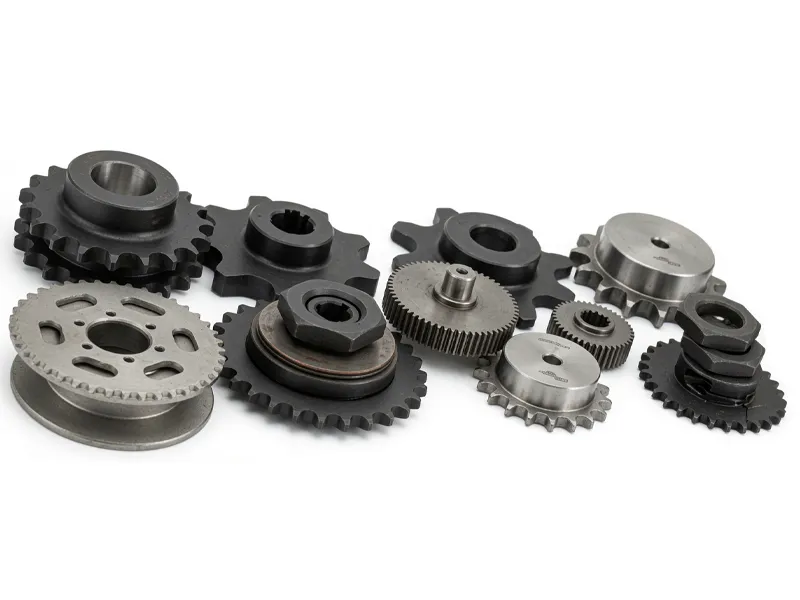
For new installations, finished bore to your exact shaft diameter is simplest. Where frequent removal is required, specify taper bore with the appropriate Taper Lock or QD bushing number. For large-diameter sprockets on keyways, stock bore with custom machining is often most economical.
Specify Material & Finish
Standard duty: C45 with black oxide. Wet or chemical environments: 316 stainless steel. Heavy abrasion: flame-cut C1045 with HRC 40–50 teeth. Food-contact requirements: SS304/316 with a clean machined bore, no keyway lubricant pockets.
Sprockets and Gears: Industry Applications
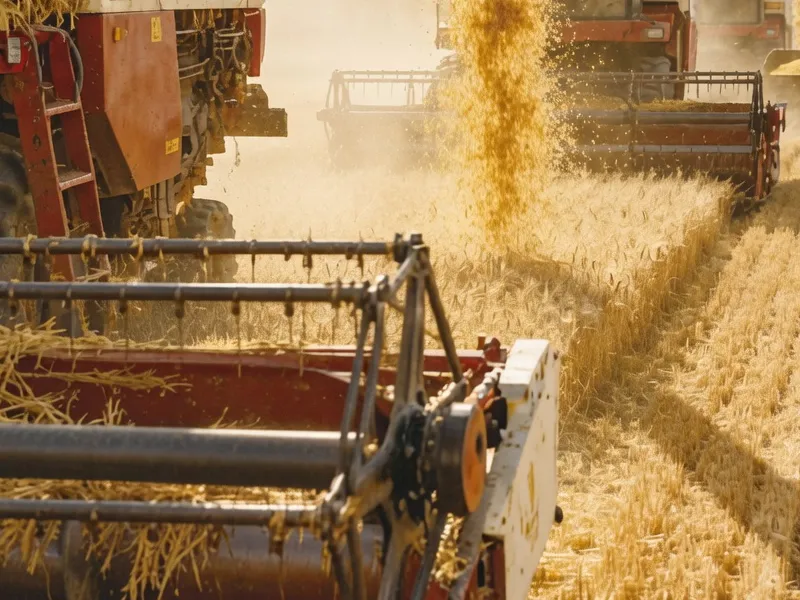
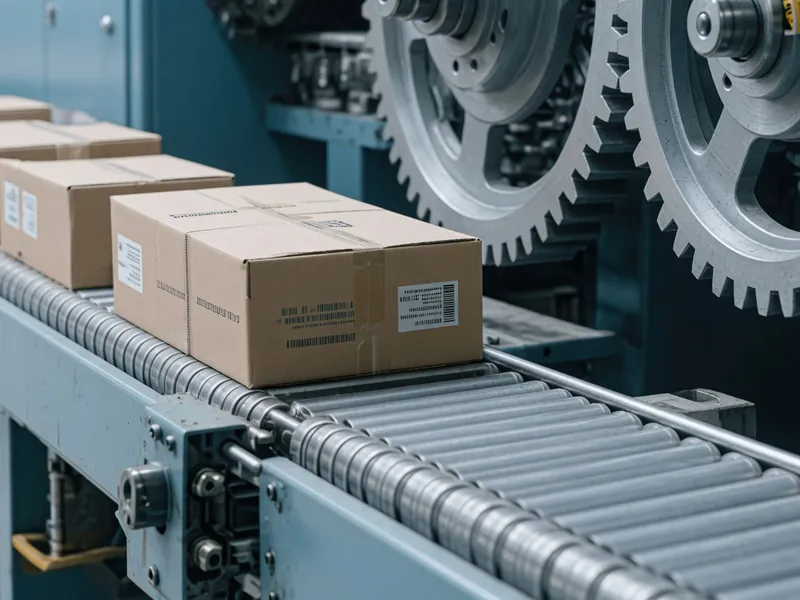
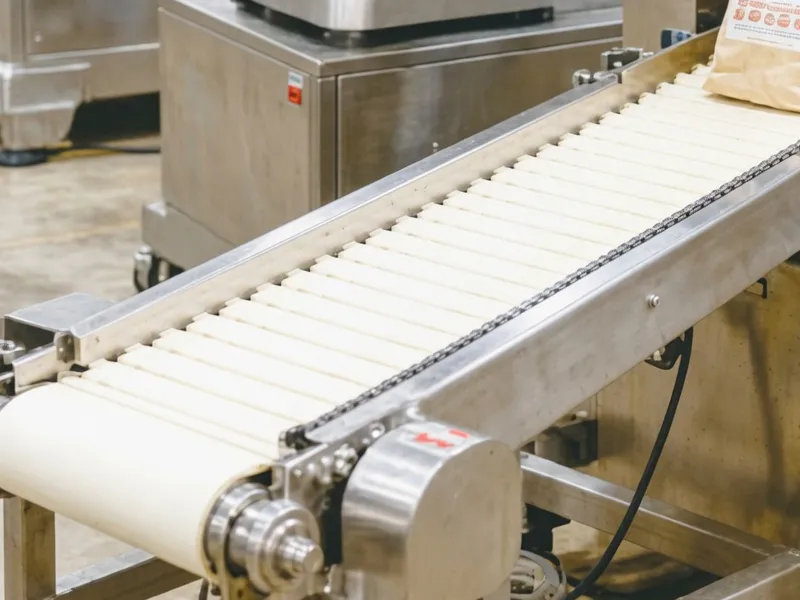
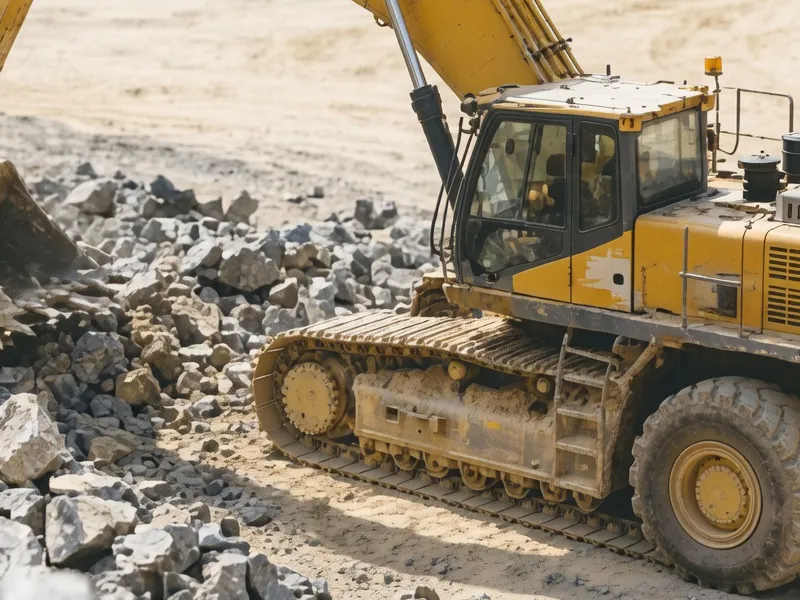
Our Advantages
Competitive Advantage of our Sprockets and Gears
Three International Standards Under One Roof
Most suppliers specialise in one standard. We stock full range European DIN, American ANSI, and Asian JIS sprockets and gears , which means procurement teams can consolidate suppliers and engineering teams can source a mixed machine spec from one catalog.
Proven Sprockets and gears tooth profile accuracy
Tooth profiles are cut on CNC machining centers and verified against standard templates. For flame-cut sprockets, we document hub face machining (A), plate face machining (B), and teeth hardness on each batch. This level of documentation matters for maintenance records and warranty claims.
Custom & Non-Standard Configurations
Need a double sprocket for two single chains in a non-standard tooth count? A stainless steel taper bore in a pitch that is not in our catalog? Or a flame-cut sprocket matched to a proprietary engineered chain? Our engineering team handles non-standard quotes regularly — with full range sprockets and gears drawings and material certs included.
Workshop