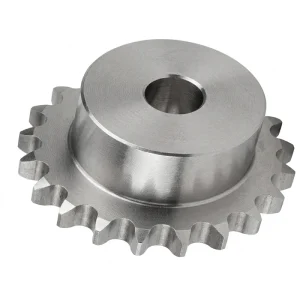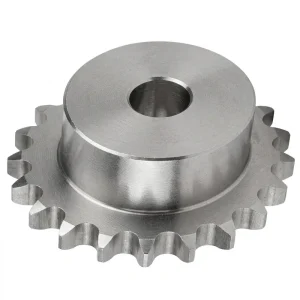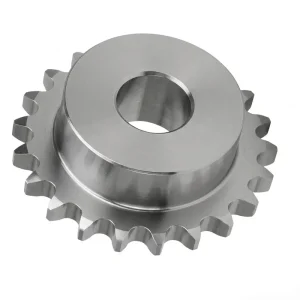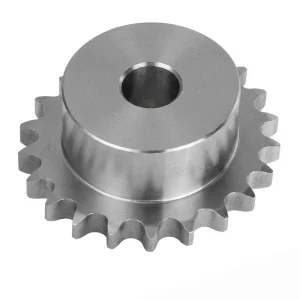
EP-1/2″×1/4″ Roller 8.51 European Sprockets
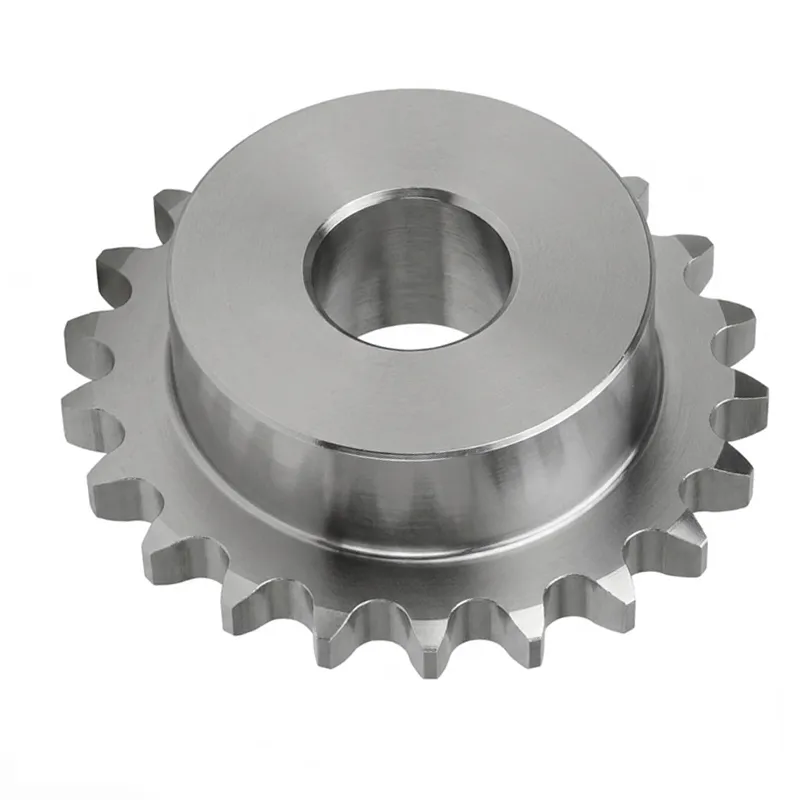
The EP-1/2″×1/4″ Roller 8.51 is designated 085B-1 in the European chain standard classification, representing a specific variant within the 12.7 mm pitch family that is often confused with — but should never be substituted for — the adjacent 083B-1 series. While both carry the same 12.7 mm chain pitch, the 085B-1 uses a larger roller diameter of 8.51 mm and a wider internal chain width of 6.4 mm, producing a different tooth pocket geometry that demands a purpose-designed sprocket rather than any common-pitch substitute. This dimensional specificity is governed by DIN 8187 and ISO/R 606, and the sprocket tooth profile is engineered exclusively around the 8.51 mm roller.
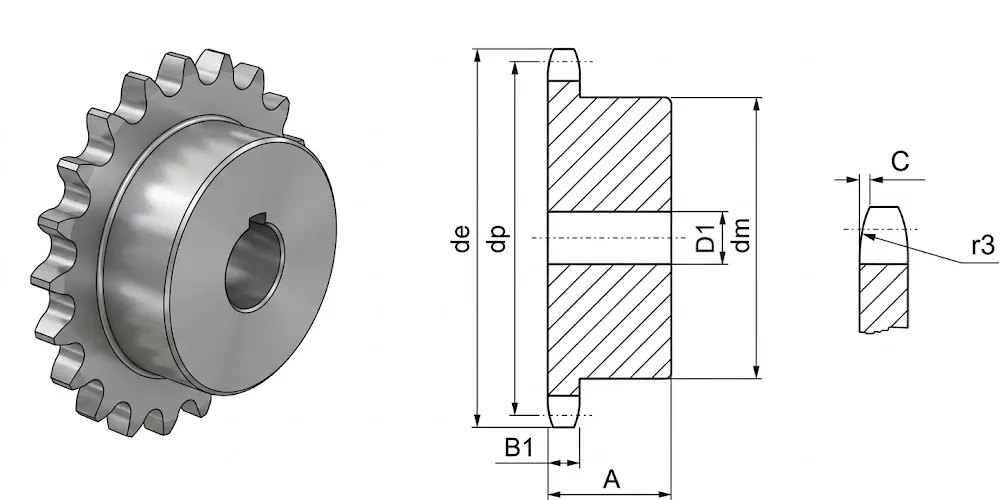
The tooth profile parameters confirm this distinction: tooth radius r₃ is 13 mm (consistent with the 12.7 mm pitch family), radius width C is 1.3 mm, and tooth width B₁ is 5.9 mm — slightly wider than the 083B-1’s 4.5 mm tooth width to accommodate the larger internal chain width.
The tooth count range runs from Z=8 through Z=125, with outer diameters from 37.2 mm at the compact Z=8 pinion position up to 511.3 mm at Z=125. Hub configurations step up with tooth count — standard stock bore is available for Z=8 through Z=48, while from Z=49 onward the design transitions to weld-on hub (marked * in the dimensional table), following the same engineering logic as the rest of the 12.7 mm pitch range: large-diameter sprocket rings are welded to separately machined hubs sized to the application shaft. Material throughout is C45 medium-carbon steel, with stainless steel and surface treatment options available on request.
European Standard Sprockets Series
EP-1/2"×1/4" Roller 8.51 European Sprockets
The 085B-1 European sprocket designation covers a unique variation within the 1/2" pitch family — the same 12.7 mm chain pitch as the 083B series, but with a larger roller diameter of 8.51 mm and a wider internal chain width of 6.4 mm. This makes each European Sprocket in this series a distinct and non-interchangeable standard, fully conformant to DIN 8187 and ISO/R 606, and widely used in agricultural and general industrial drives across Europe and in equipment exported to markets including Colombia and the wider Latin American region. Available in Z=8 through Z=125, each European Sprocket is offered with stock bore options and weld-on hub configurations for larger tooth counts.
1. Technical Specifications — 085B-1 (1/2"×1/4" Roller 8.51) European Sprockets
Full dimensional data for the 085B-1 European Sprocket simplex range. Outer diameter (dₐ), pitch diameter (dₚ), boss diameter (Dₑ), bore (D₁), and hub width (A) are in millimetres. Rows marked * indicate weld-on hub configurations applicable from Z=49 onward.
Tooth radius r₃: 13
Radius width C: 1.3
Tooth width B₁: 5.9
Pitch: 12.7
Internal width: 6.4
Roller Φ: 8.51
Chain acc. to DIN 8187
ایزو/آر ۶۰۶
Designation: 085B-1
Material: C45 steel
*Weld-on hub (Z≥49)
| Z (دندانها) | dₐ (mm) | dₚ (میلیمتر) | Dₑ (mm) | D₁ (میلیمتر) | الف (میلیمتر) |
|---|---|---|---|---|---|
| 8 | 37.2 | 33.18 | 20 | 10 | 25 |
| 9 | 41.0 | 37.13 | 24 | 10 | 25 |
| 10 | 45.2 | 41.10 | 26 | 10 | 25 |
| 11 | 48.7 | 45.07 | 29 | 10 | 25 |
| 12 | 53.0 | 49.07 | 33 | 10 | 28 |
| 13 | 57.4 | 53.06 | 37 | 10 | 28 |
| 14 | 61.8 | 57.07 | 41 | 10 | 28 |
| 15 | 65.5 | 61.09 | 45 | 10 | 28 |
| 16 | 69.5 | 65.10 | 50 | 12 | 28 |
| 17 | 73.6 | 69.11 | 52 | 12 | 28 |
| 18 | 77.8 | 73.14 | 56 | 12 | 28 |
| 19 | 81.7 | 77.16 | 60 | 12 | 28 |
| 20 | 85.8 | 81.19 | 64 | 12 | 28 |
| 21 | 89.7 | 85.22 | 68 | 14 | 28 |
| 22 | 93.8 | 89.24 | 70 | 14 | 28 |
| 23 | 98.2 | 93.27 | 70 | 14 | 28 |
| 24 | 101.8 | 97.29 | 70 | 14 | 28 |
| 25 | 105.8 | 101.33 | 70 | 14 | 28 |
| 26 | 110.0 | 105.36 | 70 | 16 | 30 |
| 27 | 114.0 | 109.40 | 70 | 16 | 30 |
| 28 | 118.0 | 113.42 | 70 | 16 | 30 |
| 30 | 126.1 | 121.50 | 80 | 16 | 30 |
| 32 | 134.3 | 129.56 | 90 | 16 | 30 |
| 35 | 146.7 | 141.68 | 90 | 16 | 30 |
| 36 | 151.0 | 145.72 | 90 | 16 | 35 |
| 38 | 158.6 | 153.80 | 90 | 16 | 35 |
| 40 | 166.8 | 161.87 | 90 | 16 | 35 |
| 42 | 175.4 | 169.95 | 90 | 16 | 40 |
| 45 | 188.0 | 182.07 | 90 | 16 | 40 |
| 48 | 200.3 | 194.18 | 90 | 16 | 40 |
| *49 | 204.3 | 198.22 | *90 | 16 | 40 |
| *50 | 208.3 | 202.26 | *90 | 16 | 40 |
| *57 | 236.4 | 230.54 | *90 | 16 | 40 |
| *60 | 248.6 | 242.66 | *90 | 16 | 40 |
| *65 | 269.0 | 262.86 | *90 | 16 | 40 |
| *72 | 297.2 | 291.16 | *90 | 16 | 40 |
| *80 | 329.4 | 323.48 | *90 | 16 | 40 |
| *85 | 349.0 | 343.70 | *90 | 16 | 40 |
| *90 | 369.9 | 363.90 | *90 | 16 | 40 |
| *100 | 410.3 | 404.31 | *90 | 16 | 40 |
| *114 | 466.9 | 460.90 | *90 | 16 | 40 |
| *120 | 491.2 | 485.16 | *90 | 16 | 40 |
| *125 | 511.3 | 505.37 | *90 | 16 | 40 |
All dimensions in millimetres. * Weld-on hub. Tolerances to DIN 8187 / ISO/R 606.
2. Five Key Advantages of the 085B-1 European Sprockets
① 8.51 mm Roller — Correctly Profiled for the 085B Chain
The 085B-1 European Sprocket tooth pocket is engineered specifically for the 8.51 mm chain roller. This is a distinct tooth geometry from the 083B-1 series despite both sharing a 12.7 mm pitch. Every European Sprocket in this range is CNC-machined to DIN 8187 tolerances for the 085B chain standard — giving buyers the assurance that chain rollers seat correctly in the tooth gullet on first engagement, without the wear-in period that indicates geometric mismatch between chain roller and sprocket profile.
② Full Z=8–125 Range — Broad Gear Ratio Flexibility
With 39 tooth count options running from Z=8 to Z=125, engineers specifying this European Sprocket series have access to the same breadth of gear ratio selection as the 083B range. Outer diameters range from 37.2 mm up to 511.3 mm — covering both compact high-speed pinion positions and large slow-speed driven European Sprocket positions in a single catalogue series. For buyers sourcing European sprockets for sale across multiple machine configurations, a single-series catalogue simplifies both specification and procurement logistics.
③ C45 Steel, CNC-Machined, Induction Hardened Tooth Flanks
Standard material for this European Sprocket is C45 medium-carbon steel (DIN EN 10083-2), CNC-machined on dedicated hobbing centres to achieve the correct involute tooth form for the 085B chain geometry. Tooth flank induction hardening to HRC 45–55 provides the surface hardness required for rated service life in industrial chain drives, while the tough core of C45 steel resists fracture under the impulse loading that occurs in agricultural and conveyor applications. This dual-property treatment is the defining difference between a commercial gear and sprocket component and a precision industrial European Sprocket unit.
④ Weld-On Hub for Large Tooth Counts from Z=49
From Z=49, the European Sprocket dimensional table transitions to a weld-on hub configuration (denoted * in the table). This design separates the European Sprocket ring and tooth form from the hub, allowing the ring to be welded to a customer-machined or fabricated hub that is turned to the exact shaft diameter required. This approach is particularly valuable in heavy equipment operating across Colombia and Latin America, where imported European-built machinery often has non-standard shaft diameters that would otherwise require costly bespoke bore machining of a large-diameter European Sprocket.
⑤ Stock Bore for Immediate Dispatch — OEM Custom Available
Stock bore European Sprocket configurations for Z=8 through Z=48 are held in inventory for immediate dispatch, supporting urgent MRO requirements and scheduled maintenance programmes without waiting for machining lead times. For OEM programmes requiring specific bore diameters, keyways, or non-standard hub configurations, our engineering team produces a fully machined custom European Sprocket to drawing with no minimum order restriction on repeat part numbers — making us a reliable single-source industrial sprockets and gears partner for long-run production programmes.
3. Working Principle — How the 085B-1 Sprocket Transmits Motion
Like all roller chain European Sprocket designs, the 085B-1 operates through positive mechanical engagement — each European Sprocket tooth enters the chain from below, lifts the chain roller out of the previous link pocket, and seats it within the current tooth gullet. The driving force is transferred from the shaft through the European Sprocket hub and tooth flanks to the chain roller, pulling the chain forward with each degree of rotation. This direct contact between the machined tooth flank and the hardened chain roller is what differentiates a chain-and-sprocket drive from slip-prone belt systems — no slippage means a fixed and predictable speed ratio under any load within the rated capacity.
What makes the 085B-1 European Sprocket geometrically distinct from the 083B-1 — despite both sharing a 12.7 mm pitch — is the tooth pocket width, which is sized around the 8.51 mm roller rather than the 7.75 mm roller of the 083B series. The tooth width B₁ of 5.9 mm in the 085B-1 is correspondingly wider than the 4.5 mm of the 083B-1, reflecting the larger chain width of 6.4 mm versus 4.88 mm. When a chain roller seats in the tooth gullet, it rests on the tooth root radius r₃ (13 mm in both series) and is guided by the tooth flanks on either side. If the tooth width is narrower than the chain's inner link plates demand — as would occur if an 083B European Sprocket was inadvertently used with an 085B chain — the plates contact the tooth flanks at the wrong height, generating lateral wear and early chain failure.
Velocity uniformity in the 085B-1 European Sprocket series follows the same chordal action relationship as all roller chain sprockets: the polygonal effect decreases with increasing tooth count. For general industrial applications where vibration is a concern — packaging machines, printing equipment, or conveyor synchronisation drives — selecting Z=17 or above for the smaller sprocket in the pair is recommended practice. For heavy slow-speed drives such as those found in agricultural equipment and material handling systems operating in Colombia, tooth counts of Z=13–Z=16 are acceptable since vibration at low RPM does not cause structural resonance in typical machinery frames.
4. Material Options and Surface Treatments
C45 medium-carbon steel (DIN EN 10083-2) is the standard production material for every European Sprocket in the 085B-1 series. The alloy is selected because it satisfies three simultaneous requirements in a precision European Sprocket: it machines accurately to the tight DIN 8187 tooth profile tolerances, it hardens effectively to HRC 45–55 at the tooth flank under induction heating while retaining a ductile core, and it maintains dimensional stability over the temperature cycling that occurs in industrial chain drives running with intermittent loads. Material batch traceability certificates are available on request for OEM technical file submissions.
For environments incompatible with carbon steel — food and beverage processing, pharmaceutical manufacturing, chemical handling, and coastal or tropical installations — a European Sprocket from the stainless steel sprockets and gears range (AISI 304 and AISI 316) is available with the same 085B-1 tooth geometry. AISI 316 is the recommended grade for wash-down applications involving chlorinated sanitising solutions, as its molybdenum alloying provides markedly better resistance to pitting corrosion than AISI 304. Colombian buyers operating in humid Pacific coast regions or in sugar-refinery wash environments should specify AISI 316 as the default stainless grade for all outdoor or wet-zone European Sprocket positions.
Surface treatment options for the standard carbon steel European Sprocket range include black oxide (black kettenrad zahnrader finish), which applies a dimensionally negligible layer that suppresses surface rust during storage without affecting bore clearances. Zinc phosphate with oil is preferred for any European Sprocket destined for tropical storage environments or extended transit to overseas destinations. For specialist clean applications, plastic sprockets and gears in engineering-grade acetal (POM) are available for the lighter tooth count configurations within the 085B-1 pitch, providing self-lubrication and zero metallic particle generation in sensitive environments — though with significantly lower load capacity than the steel equivalents.
۵. سناریوهای کاربردی
The 085B-1 European Sprocket addresses a specific segment of the 12.7 mm pitch chain drive market — applications where the larger 8.51 mm roller specification was adopted either by the original machine builder or through the adoption of a particular DIN chain catalogue series. Below are the primary sectors where this sprocket is specified.
European Agricultural Machinery — Export Markets
European-built tractors and implements exported to Colombia, Ecuador, Peru, and other Andean-region markets were frequently equipped with an 085B European Sprocket chain drive rather than the more common 083B standard. Field engineers maintaining this equipment who specify 083B replacement kettenrad zahnrader components when the original machine uses an 085B European Sprocket will encounter accelerated tooth and roller wear from the first hours of operation. Identifying the correct sub-series from the original machine documentation — or by measuring the existing chain roller diameter — is essential before ordering replacement parts for imported European agricultural equipment.
Material Handling and Bucket Elevator Drives
Bucket elevator drives, screw conveyor drives, and belt conveyor head-shaft assemblies in grain handling, cement, and mineral processing facilities frequently use a large-tooth-count 085B-1 European Sprocket in the Z=40–Z=72 range. At these tooth counts, the weld-on European Sprocket hub configuration allows the ring to be fitted to existing drive shafts of variable diameter without bore constraint — a practical consideration in facilities where elevator shafts were fabricated on-site rather than purchased to standard dimensions. The industrial chains and sprockets europe factory production capability for this size range supports both new installation and refurbishment of existing elevator drives.
Food Processing — Stainless Steel Applications
Meat processing conveyors, fish handling lines, and dairy product handling systems specify a stainless steel European Sprocket in the 085B-1 geometry for all positions in wash-down zones. The AISI 316 material option for this European Sprocket carries the same tooth profile as the carbon steel range, allowing direct substitution without re-engineering the drive system when upgrading from a carbon steel installation to a food-grade compliant stainless configuration. Combined with DIN 8187 chain traceability and EU Regulation 1935/2004 material declarations, these sprockets support full food safety compliance documentation for processing plant audits.
Textile and Weaving Machine Drives
Loom take-up drives, warp beam tensioning systems, and knitting machine transmission chains in European-standard textile machinery frequently use the 085B-1 European Sprocket as the primary chain drive component. The wider tooth form of this European Sprocket accommodates the specific 085B chain that some European textile machine builders adopted as their chain standard of choice, and maintaining the correct European Sprocket series through the machine's service life is essential for the synchronisation accuracy that textile production demands. The new kettenrad zahnrader installation market for textile equipment drives represents a consistent segment of demand for this series across European production facilities.
Woodworking and Panel Processing Equipment
Veneer press drives, panel conveyor systems, and sawmill board handling lines use a European Sprocket chain drive in positions where the 085B chain's larger roller diameter provides improved roller-to-tooth contact area compared to the 083B series — a marginal advantage that some machine designers exploit to extend European Sprocket tooth life under the abrasive sawdust and resin contamination common in woodworking environments. Size kettenrad zahnrader options in the Z=18–Z=30 range cover the majority of sprocket positions in these applications, with stock bore availability ensuring fast replacement turnaround for maintenance teams.
Mining and Quarry Auxiliary Equipment
Auxiliary drives on mobile screening plant, quarry feeder conveyors, and underground haulage equipment occasionally use the 085B-1 European Sprocket in positions where the wider chain offers incremental additional load capacity over the 083B standard without stepping up to the next pitch size. For procurement teams sourcing best european sprockets for demanding mine-site environments, our stock bore range for Z=8 to Z=48 provides fast turnaround on standard sizes, while the weld-on hub range from Z=49 covers the larger driven positions on slow-speed heavy-load conveyors.
6. Standards and Regulatory Requirements
Every industrial European Sprocket placed into service across different markets must meet the mechanical safety, materials, and documentation standards applicable in each jurisdiction. The following framework covers the key regulatory requirements for this product range.
EU Machinery Directive 2006/42/EC
Every European Sprocket used as a transmission component in CE-marked machinery must conform to the essential health and safety requirements of this Directive. DIN 8187 / ISO/R 606 conformance of the 085B-1 European Sprocket establishes the dimensional baseline required for inclusion in the technical file supporting CE marking of the host machine.
استاندارد DIN 8187 / ISO/R 606
The governing European standard for short-pitch precision roller chains and the matching European Sprocket. The 085B-1 designation is defined within this standard, specifying the chain pitch, roller diameter, inner width, and the corresponding sprocket tooth profile geometry. All European Sprocket units in this series are dimensionally verified to DIN 8187 before dispatch, with records traceable to the production batch.
Colombia — Icontec NTC and INVIMA
Colombian buyers in food, pharmaceutical, and mining sectors must comply with applicable Icontec NTC standards, which in most cases accept ISO equivalents directly. For food and pharmaceutical applications, INVIMA oversight requires material traceability for components in contact with products — documentation we provide with stainless steel 085B-1 orders as standard practice.
DGUV Technical Rules — Germany and EEA
The DGUV's occupational safety rules for machinery in Germany and the EEA require that replacement transmission components meet the dimensional specification of the original parts. Specifying a DIN 8187-conformant 085B-1 European Sprocket — rather than a dimensionally similar but non-conformant substitute from a different pitch sub-series — is the correct approach for compliance in Germany and wider European manufacturing environments.
EU Food Contact — Regulation (EC) 1935/2004
For food processing applications, an AISI 316 stainless steel European Sprocket meets the material suitability criteria for incidental food contact under this Regulation. Compliance declarations are available with stainless steel 085B-1 orders, supporting hygiene audit documentation for food plant certification programmes including IFS, BRC, and FSSC 22000.
REACH / RoHS Compliance
C45 carbon steel and AISI 316 stainless steel components are inherently RoHS compliant. REACH SVHC substance declarations are available for surface-treated carbon steel sprockets on request, supporting environmental compliance documentation required by EU industrial buyers and multinational OEM supply chain audits.
7. About the Manufacturer
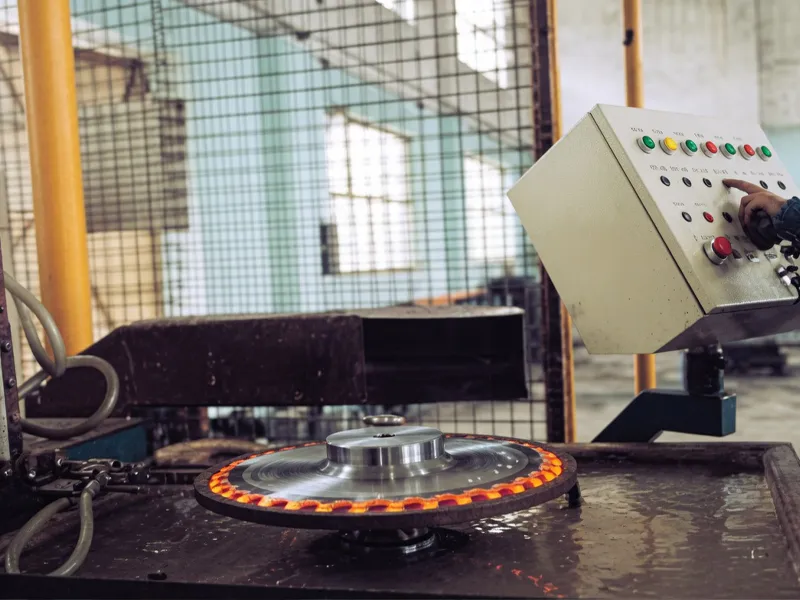
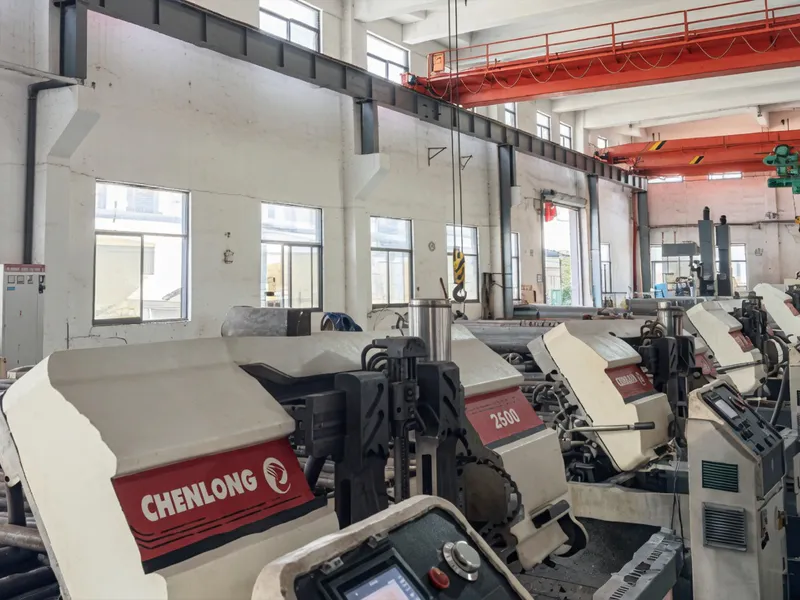
Since 2010, our production facility has specialised in precision European Sprocket and gear components built to the full range of international dimensional standards. Our machining floor runs CNC hobbing centres, profile grinders, and coordinate measuring stations in a continuous production flow — a setup that maintains DIN tooth profile tolerances across complete production batches rather than relying on end-of-batch sample inspection.
Every European Sprocket tooth is verified against the applicable standard — DIN 8187, ANSI B29.1, or JIS B 1801 — before dispatch, and gear tooth accuracy is documented to DIN 3961 / ISO 1328 quality grades for OEM traceability requirements. Our catalogue spans the European DIN/ISO, American ANSI/ASME, and Asian JIS roller sprocket standards, and a full DIN 782 gear range covering spur gears, bevel gears, and racks — making us a true single-source commercial gear and sprocket partner for multi-standard projects. Whether the requirement is a stock-bore European Sprocket for immediate MRO dispatch or fully machined custom sprockets and gears for a production OEM programme, our capability covers both without minimum order penalties on repeat design numbers.
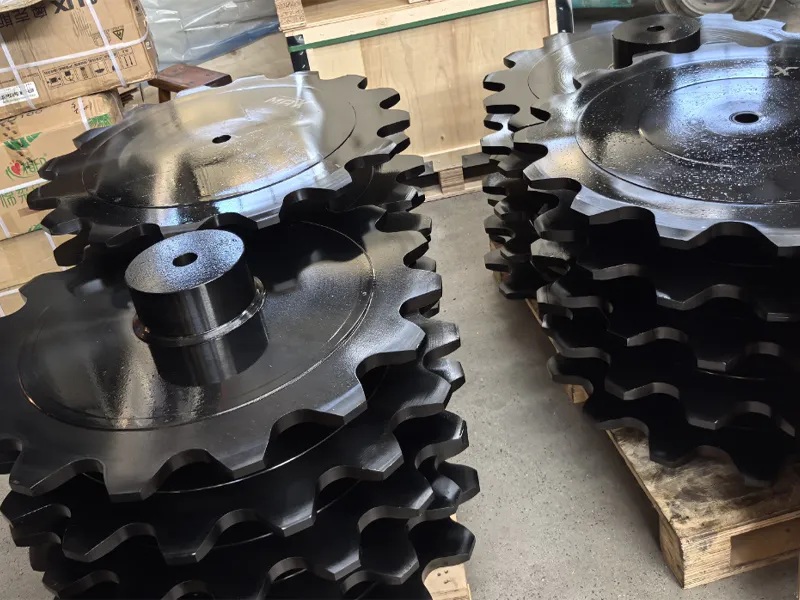
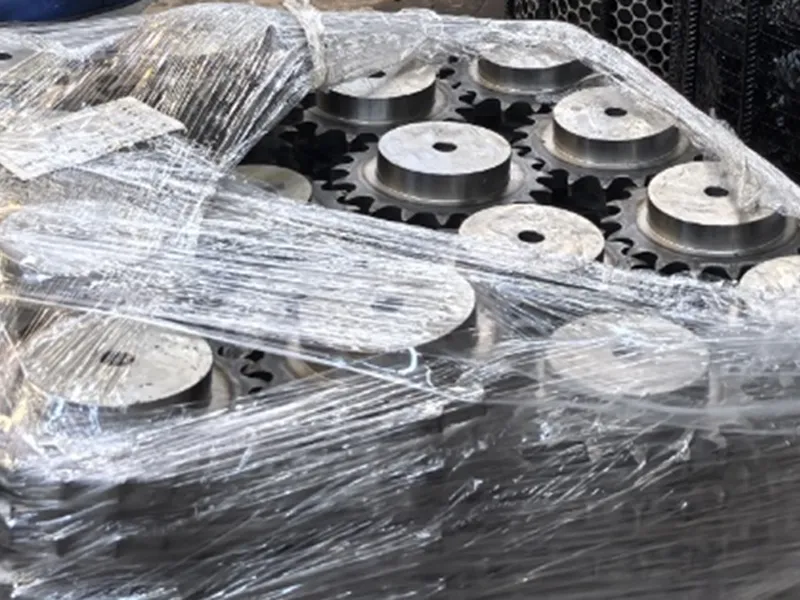
WorkShop
8. Compatible Drive System Components
A precision European Sprocket performs to its specification only when paired with compatible drive components manufactured to the same standard. We supply the full system — European Sprocket, chain, and reducer — from a single source, eliminating the specification gaps and tolerance mismatches that arise from multi-supplier procurement.
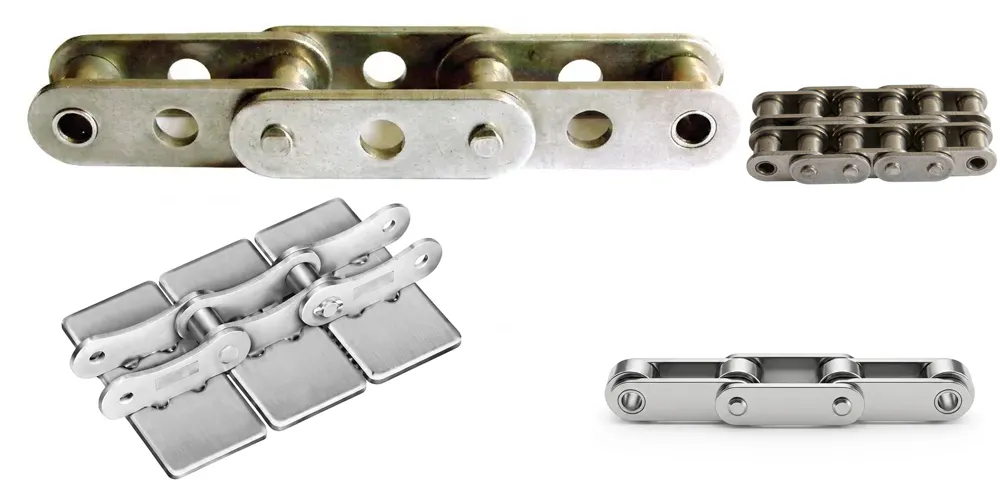
085B DIN 8187 Roller Chain
Correct chain selection is the single most important compatibility decision for any sprocket installation. An 085B chain — with its 12.7 mm pitch, 6.4 mm inner width, and 8.51 mm roller — must be paired with an 085B-1 European Sprocket and never substituted with an 083B chain, despite both carrying the 12.7 mm pitch designation. Our roller chains are manufactured to the same DIN 8187 / ISO/R 606 standards as the sprocket series, with all three critical dimensions — pitch, inner width, and roller diameter — within the tolerance windows that govern correct roller-to-tooth contact. For buyers sourcing a European Sprocket and chain as a matched set, we can supply a single dimensional conformance declaration covering both components, simplifying incoming inspection and compliance documentation.
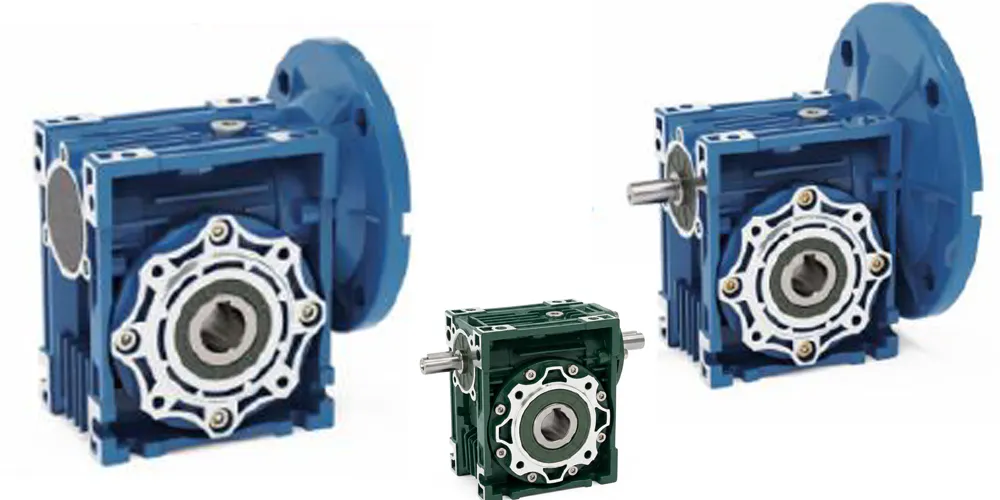
NMRV Worm Gear Reducer
Most European Sprocket drives receive their speed reduction through a worm gear reducer mounted between the motor and the drive shaft. Our NMRV worm gear reducers are available in output configurations that align directly with the bore range used across the 085B-1 sprocket series — so drive shaft diameters, output keyways, and centre heights are confirmed against the sprocket bore specification before delivery rather than discovered as mismatches on site. Combining a European Sprocket and NMRV reducer from a single supplier eliminates the most common source of commissioning delays in chain drive installations and supports the one-stop procurement model that industrial buyers in Colombia and Europe increasingly require.
سوالات متداول
تدوینگر: PXY