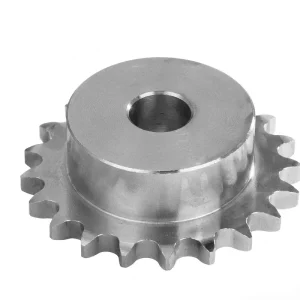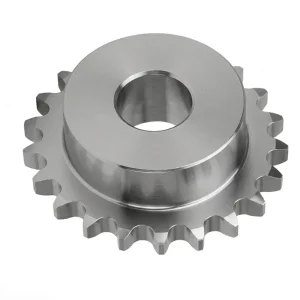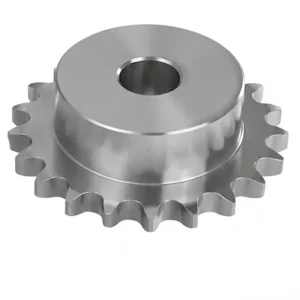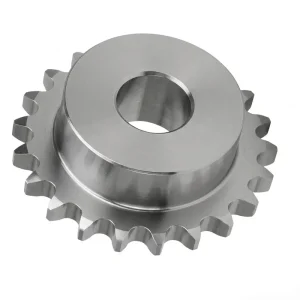
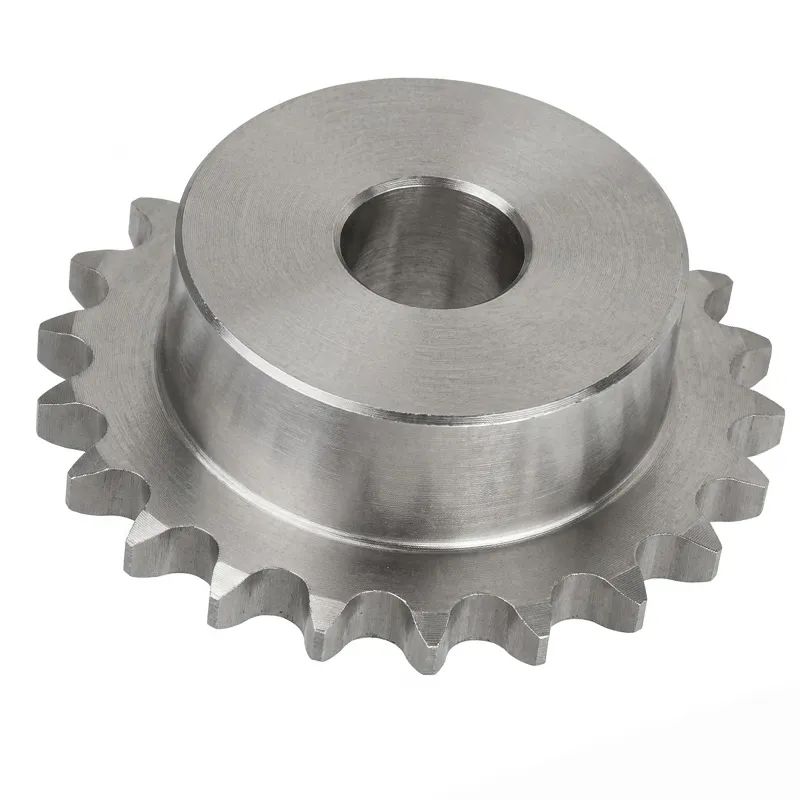
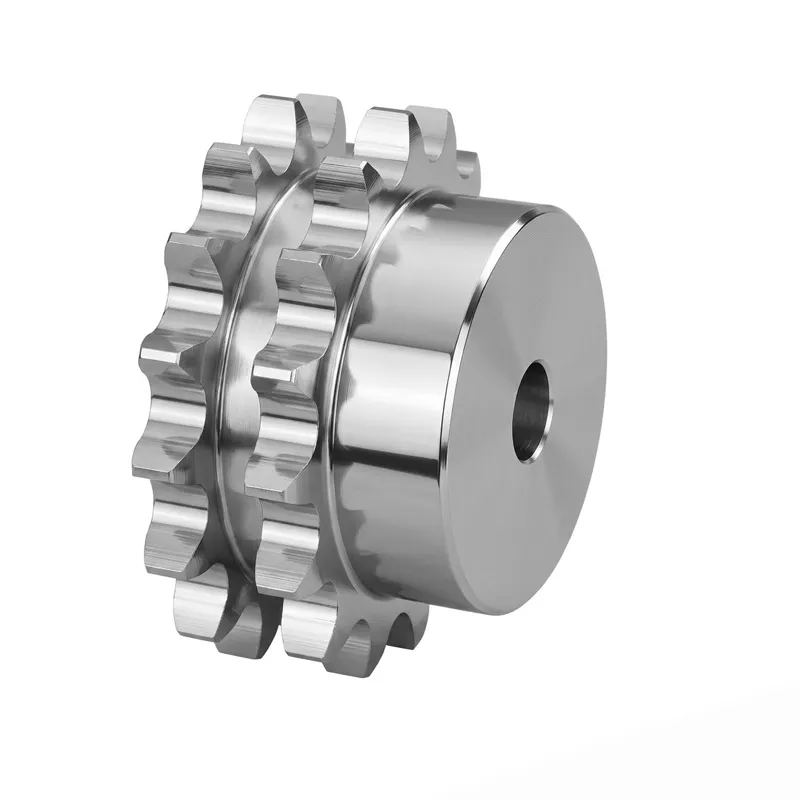
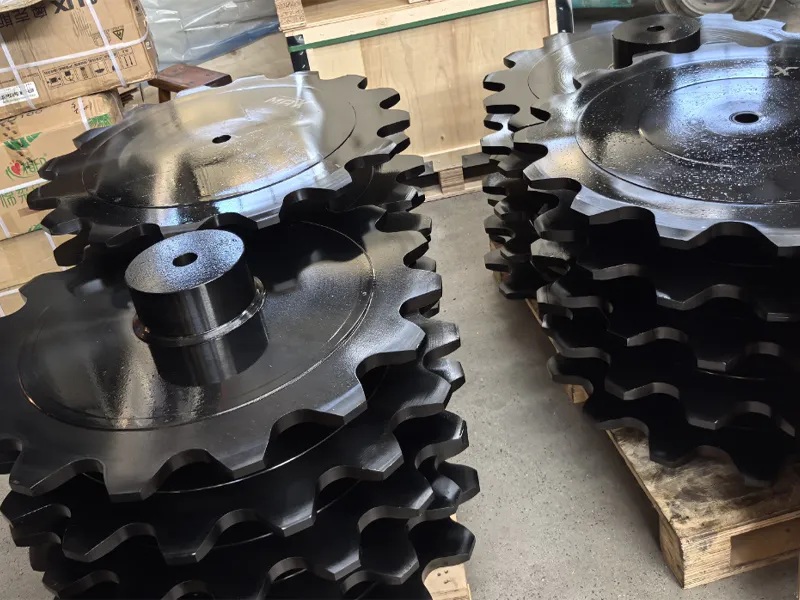
Зірочки EP 8×3 мм європейського виробництва — серія 05B-1-2
The 05B-1-2 is a distinct sub-family within the broader European Standard Sprockets Series, identified by its 8 mm pitch — one step up from the 05B’s closest predecessor — and its ability to serve both simplex (single-strand) and duplex (double-strand) chain configurations from a single product range. The dual-strand capability is an important differentiator: whereas many European Sprockets families are produced in simplex format only, the 05B-1-2 range delivers a matched set of simplex bore dimensions (dₕ, D₁, A) alongside duplex dimensions (dₕ, D₂, A) in the same dimensional table.
The pitch circle diameter (dₚ) and tip circle diameter (d₃) values span from 20.90 mm at Z=8 through to 318.34 mm at Z=125, making the 05B-1-2 European Sprockets range suitable for compact instrument drives as well as large-diameter slow-speed industrial conveyors. The C45 medium-carbon steel base material and the clearly flagged weld-on hub transition (denoted by * in the bore table from Z=78 upward for simplex, Z=90 for duplex) reflect the structural decisions required when hub cross-sections outgrow the practical limits of through-bored construction.
Зірочки EP 8×3 мм європейського виробництва — серія 05B-1-2
The EP 8×3mm European Sprockets series — catalogued under the 05B-1-2 reference — are precision-manufactured drive components fully compliant with DIN 8187 and ISO/R 606. With an 8 mm chain pitch, 3 mm internal chain width, and a roller diameter of 5 mm, these units address both simplex and duplex drive configurations across a tooth count range of Z=8 through Z=125. For mechanical engineers sourcing reliable European Sprockets for industrial conveyors in Germany, packaging automation in Colombia, or agricultural machinery across Latin America, the 05B-1-2 format delivers the dimensional accuracy and standards traceability that demanding procurement specifications require.
Whether you are evaluating european sprockets for sale to replace worn drivetrain components, specifying new units for an OEM machinery build, or comparing European Standard Sprockets against ANSI or JIS alternatives, this page provides the complete dimensional data, material details, and application guidance you need. Every unit in this range undergoes tooth-profile verification against the applicable DIN standard before shipment.
1. Параметри технічної специфікації
Fixed profile data for the 05B-1-2 European Sprockets chain and sprocket system:
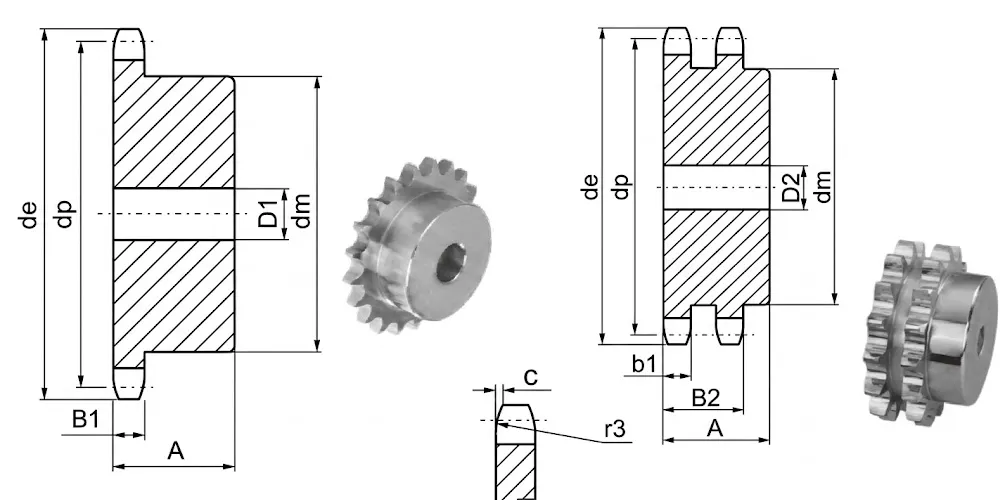
Full dimensional table for EP 05B-1-2 European Sprockets. Simplex: dₕ / D₁ / A; Duplex: dₕ / D₂ / A. All dimensions in mm.
| Z | d₃ (mm) | dₚ (мм) | Simplex dₕ | Simplex D₁ | Simplex A | Duplex dₕ | Duplex D₂ | Duplex A |
|---|---|---|---|---|---|---|---|---|
| 8 | 24.0 | 20.90 | 13 | 6 | 12 | 12 | 8 | 18 |
| 9 | 26.6 | 23.39 | 15 | 6 | 12 | 15 | 8 | 18 |
| 10 | 29.2 | 25.89 | 17 | 8 | 12 | 17 | 8 | 18 |
| 11 | 31.7 | 28.39 | 18 | 8 | 13 | 19 | 8 | 18 |
| 12 | 34.2 | 30.91 | 20 | 8 | 13 | 21 | 8 | 18 |
| 13 | 36.7 | 33.42 | 23 | 8 | 13 | 24 | 8 | 18 |
| 14 | 39.2 | 35.95 | 25 | 8 | 13 | 26 | 8 | 18 |
| 15 | 41.7 | 38.48 | 28 | 8 | 13 | 29 | 8 | 18 |
| 16 | 44.3 | 41.01 | 30 | 8 | 14 | 32 | 10 | 20 |
| 17 | 46.8 | 43.53 | 30 | 8 | 14 | 34 | 10 | 20 |
| 18 | 49.3 | 46.07 | 30 | 8 | 14 | 37 | 10 | 20 |
| 19 | 51.9 | 48.61 | 30 | 8 | 14 | 39 | 10 | 20 |
| 20 | 54.4 | 51.14 | 30 | 8 | 14 | 40 | 10 | 20 |
| 21 | 57.0 | 53.68 | 35 | 8 | 14 | 40 | 10 | 20 |
| 22 | 59.5 | 56.21 | 35 | 8 | 14 | 40 | 10 | 20 |
| 25 | 67.5 | 63.83 | 35 | 8 | 14 | 40 | 10 | 20 |
| 26 | 69.5 | 66.37 | 40 | 10 | 16 | 50 | 12 | 22 |
| 30 | 79.8 | 76.53 | 40 | 10 | 16 | 50 | 12 | 22 |
| 35 | 92.5 | 89.25 | 40 | 10 | 16 | 60 | 12 | 22 |
| 40 | 105.3 | 101.97 | 40 | 10 | 16 | 60 | 12 | 22 |
| 45 | 118.0 | 114.69 | 58 | 10 | 20 | 78 | 12 | 38 |
| 50 | 130.7 | 127.41 | 58 | 10 | 20 | 78 | 12 | 38 |
| 57 | 148.6 | 145.22 | 78 | 10 | 20 | 78 | 12 | 38 |
| 60 | 156.2 | 152.86 | 78 | 10 | 34 | 78 | 12 | 38 |
| 65 | 169.6 | 165.58 | 78 | 10 | 34 | 78 | 12 | 38 |
| 72 | 187.5 | 183.40 | 78 | 10 | 34 | 78 | 12 | 38 |
| 76 | 197.7 | 193.59 | 78 | 10 | 34 | 78 | 12 | 38 |
| 78 | 202.8 | 198.68 | *78 | 10 | 34 | *78 | 12 | 38 |
| 80 | 207.9 | 203.77 | *78 | 10 | 34 | *78 | 12 | 38 |
| 85 | 220.6 | 216.50 | *78 | 10 | 34 | *78 | 12 | 43 |
| 90 | 233.4 | 229.23 | *78 | 10 | 34 | *88 | 12 | 43 |
| 100 | 258.9 | 254.68 | *78 | 10 | 34 | *88 | 12 | 43 |
| 110 | 284.3 | 280.15 | *88 | 10 | 39 | *88 | 12 | 43 |
| 120 | 310.0 | 305.61 | *88 | 10 | 39 | *88 | 12 | 43 |
| 125 | 322.5 | 318.34 | *88 | 10 | 39 | *88 | 12 | 43 |
* Weld-on hub. For complete Z=8–Z=125 intermediate tooth counts, contact us for the full datasheet.
2. Five Key Advantages of 05B-1-2 European Sprockets
Most European Sprockets product lines cover only single-strand configurations. The 05B-1-2 European Sprockets range is one of the few families that ships with fully documented simplex and duplex dimensional data in the same series table. An engineer specifying European Sprockets for a drive that may need a capacity upgrade later can order the simplex variant now and transition to the duplex configuration without changing shaft spacing, housing design, or chain pitch — simply by replacing the sprocket pair and chain strand count. This forward-compatibility reduces redesign cost significantly.
Every European Sprockets unit in the 05B-1-2 range carries dimensional conformity with DIN 8187 and ISO/R 606 — the two foundational documents governing European roller chain sprockets. Tooth profile geometry, seating curve radius, and bore tolerances are all produced and inspected against these norms. For procurement teams in Colombia, Germany, or Spain sourcing these components for machinery that must carry CE documentation, the ability to reference a single globally recognised norm simplifies the technical file assembly and supplier qualification process considerably.
This series spans tooth counts from a compact Z=8 (tip circle 24.0 mm) through to a large Z=125 (tip circle 322.5 mm). This breadth is essential for engineers designing drives with a wide range of speed ratios within a single chain standard. Pairing a Z=10 drive sprocket with a Z=100 driven unit gives a 10:1 reduction from a single chain loop — a ratio that would otherwise require a multi-stage gearbox. Sourcing this full range from one European Sprocket Manufacturer eliminates multi-supplier complexity in both initial build and aftermarket replacement procurement.
Tooth geometry accuracy in these drive components directly governs noise level, chain elongation rate, and sprocket wear life. Production on CNC machining centres holds the tooth radius (r₃ = 8 mm), radius width C (1.0 mm), and bore concentricity to tolerances that meet DIN quality grade requirements across every batch — not just on first-article samples. For industrial sprockets and gears applications where 24-hour operation is the norm, precision tooth geometry translates directly to fewer unplanned stoppages and a measurably longer maintenance interval.
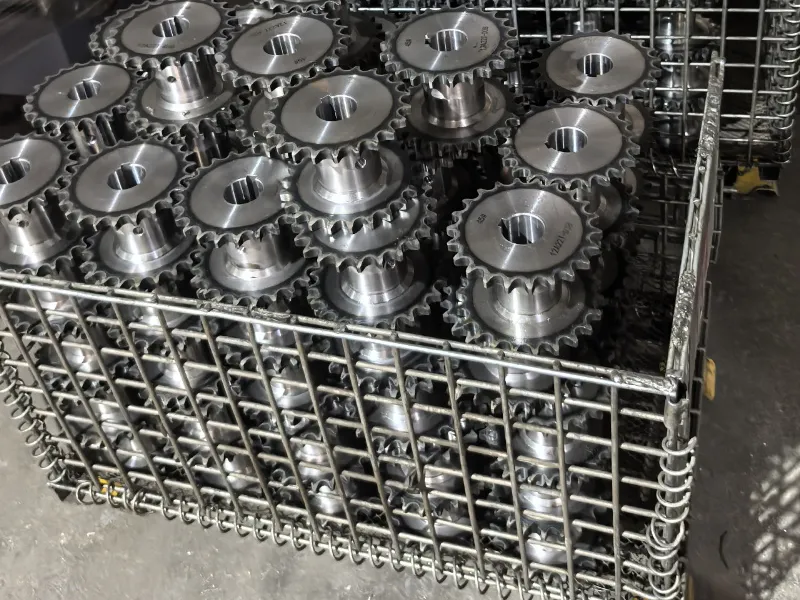
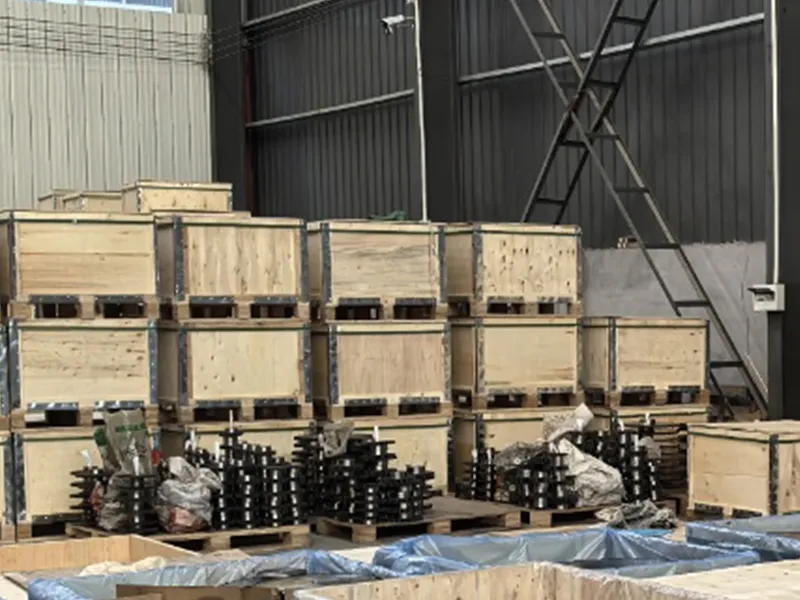
Standard tooth count sizes in this range are held as stock for prompt shipment to industrial buyers needing rapid replacement kettenrad zahnrader or new build European Sprockets. Custom OEM variants — non-standard bores, keyways, set-screw positions, extended hub lengths, and surface treatments — are manufactured using the same CNC infrastructure, with full dimensional documentation for incoming inspection teams. For custom sprockets gears projects, this integrated supply model ensures that standard and custom parts come from the same quality system, with consistent traceability records across both.
3. How 8×3mm European Sprockets Work
European Sprockets are positive-engagement drive elements: the chain rollers seat into the tooth pockets of the sprocket rather than relying on friction. When the input shaft rotates the driving sprocket, the engaged chain rollers are pushed forward sequentially, pulling the chain strand and driving the driven unit on the output shaft. The mechanical efficiency of this engagement — typically above 98% per mesh — explains why sprockets and chains remain preferred over belt drives in applications where exact speed ratios and high torque density are required.
In this series, the tooth geometry is governed by two key parameters from DIN 8187. The seating curve, defined by tooth radius r₃ = 8 mm, determines how the roller contacts and leaves the tooth flank. Too small a radius produces edge loading on the roller; too large causes the roller to slip laterally. The 8 mm value is calculated to match the 5 mm roller diameter of 05B chain, providing the correct contact arc. Tooth width B₁ = 2.8 mm for simplex — slightly narrower than the chain inner width of 3 mm — gives the correct roller clearance without allowing chain side plates to foul the sprocket face.
For the duplex configuration within the same European Sprockets product family, the total width B₂ = 8.3 mm accommodates two chain strands side by side with the correct strand separation dimension. When a double chain sprocket gear arrangement is needed — for example, on a heavy conveyor head shaft in a Colombian mining operation or a German packing plant — the duplex European Sprockets variant doubles the transmitted force without changing the shaft centre distance or requiring a different chain pitch. The weld-on hub transition, applied to European Sprockets from Z=78 upward in simplex (Z=90 in duplex), reflects the structural reality that at large diameters, bore-through construction no longer provides adequate hub face stiffness under the bending moments generated by heavy chain tension.
4. Material and Surface Treatment
The standard production material is C45 medium-carbon steel, as specified in the product documentation. C45 combines tensile strength of approximately 600–800 MPa in normalised condition with the machinability required for CNC hobbing of precise tooth profiles across the full Z=8 to Z=125 range. Following tooth machining, units in this series are available with induction or through-hardening to achieve case hardness of 50–58 HRC at the tooth flank, preserving a tough core to resist shock loading from chain impact at drive engagement. This combination of hard tooth surface and ductile core is essential for components operating in applications with cyclical shock loading — such as agricultural harvesting drives or waste handling conveyors.
For environments where corrosion resistance is a design factor — particularly on food processing lines in Colombia subject to regular wash-down, or for outdoor drive systems in humid climates — stainless steel sprockets & gears in AISI 304 or AISI 316L are available as an alternative material specification. Steel sprockets and gears in 316L grade offer improved chloride resistance compared to 304, making them the preferred option in coastal or chemical-adjacent industrial environments. Black oxide treatment is also offered on standard C45 European Sprockets as a cost-effective corrosion deterrent for indoor applications with controlled humidity levels.
Engineering-grade plastic sprockets and gears in acetal (POM) or polyamide (PA66) suit light-duty drive applications where noise reduction, weight savings, or metal contamination avoidance are driving requirements. These grades suit European Sprockets in laboratory automation, pharmaceutical packaging, and office equipment drives, though their load and temperature ratings are significantly lower than steel variants and must be matched to the application duty cycle accordingly.
Вуглецева сталь C45
Standard grade for European Sprockets; induction-hardenable; optimal for high-cycle industrial use
Stainless 304 / 316L
Corrosion-resistant option for food processing, wash-down, and marine environments
Black Oxide Treated
Black kettenrad zahnrader finish; mild corrosion deterrent for indoor European Sprockets applications
Engineering Plastic
Plastic sprockets and gears in POM or PA66 for light-duty, low-noise European Sprockets drives
5. Сценарії застосування
The 8 mm pitch and dual simplex/duplex capability of the 05B-1-2 European Sprockets series positions it in a performance tier above lighter 5 mm and 6 mm pitch sprocket families, without yet reaching the bulk of heavy-industrial 12 mm pitch chains. This makes these European Sprockets particularly well-suited to moderate-load, precision-driven environments across a wide range of industries.
Planters, harvesters, forage balers, and greenhouse curtain drives across Europe and Colombia consistently specify 8 mm pitch European Sprockets for their combination of compact size and genuine torque capacity. The C45 steel construction handles the shock loads from uneven terrain and variable crop densities, while the wide tooth count range allows transmission designers to achieve the large speed reduction ratios needed between tractor PTO shafts and working implements. Simplex European Sprockets are standard for lighter drives; the duplex variant is applied where torque demand exceeds single-strand capacity without a drive-system redesign.
Filling lines, bottle handling conveyors, tray sealers, and labelling machines in food and beverage plants use European Sprockets in the 05B-1-2 format for their precise pitch engagement and readily available stainless steel material option. In Colombia — where food export processing for flowers, coffee, and fruit involves conveyors operating in wet, chemically treated environments — stainless steel sprockets & gears in this series satisfy hygiene requirements without sacrificing the DIN-traceability that import market machinery documentation demands. The dimensional interchangeability across the range simplifies spare-part stocking at remote processing sites.
Distribution centre sorters, pallet transfer conveyors, and automotive production line indexers use industrial sprockets and gears in the 05B-1-2 range where the 8 mm pitch provides a good balance of chain strength and running speed. European Sprockets in this format are a common specification in sprockets germany factory equipment, as well as in logistics infrastructure projects in Colombia that draw on European machinery standards. The duplex European Sprockets configuration is applied on head-drive drums where two strands running in parallel provide the redundancy and torque headroom that high-throughput sorting lines require.
Cartoning machines, bundling systems, and folding-gluing equipment use European Sprockets in the 05B-1-2 series to synchronise multiple rollers, cams, and conveyor sections with the timing accuracy that packaging cycle rates demand. Printing presses — particularly sheetfed offset and digital finishing lines used across Colombia's commercial printing sector — also specify 8 mm pitch European Sprockets for registration drives where tooth profile accuracy directly affects print quality. Chain sprockets in this family offer the tooth profile consistency and low maintenance frequency that continuous-operation printing environments expect.
At the large-tooth-count end of the 05B-1-2 European Sprockets range — Z=80 through Z=125 — the weld-on hub construction enables deployment in the heavy auxiliary drives of concrete mixers, crusher feed conveyors, and underground haulage systems. These applications impose both high sustained torque and significant shock loading on industrial sprockets and gears. The C45 steel material with case hardening, combined with the generous hub cross-sections of the weld-on hub design, gives these large-format units the structural resilience that mining and construction environments require. Replacement kettenrad zahnrader for this size range is available from stock for standard configurations.
Automated dispensing systems, blister packaging lines, and laboratory liquid-handling robots increasingly rely on compact European Sprockets in the 05B-1-2 format for their reliable, slip-free indexing behaviour. In pharmaceutical manufacturing environments governed by EU GMP regulations or Colombia's INVIMA standards, the material documentation available for stainless steel European Sprockets — including material test certificates and dimensional inspection records — supports the Equipment Qualification (IQ/OQ/PQ) documentation workflows that regulatory compliance requires. Plastic sprockets and gears in POM or PA66 are also used here where metal contamination avoidance is specified.
6. Regional Regulations and Standards Compliance
When procuring European Sprockets for cross-border machinery projects, the applicable regulatory framework depends on both the machinery category and the destination market. The following overview covers the principal jurisdictions relevant to buyers of 05B-1-2 European Sprockets.
European Union — Machinery Regulation (EU) 2023/1230
The EU Machinery Regulation 2023/1230, which begins phased application from 2027 (superseding Directive 2006/42/EC), requires that machinery placed on the EU market carry CE marking supported by a Technical File. European Sprockets conforming to DIN 8187 / ISO/R 606 are used as harmonised standard components within CE-marked machines. Individual sprockets do not require separate CE marking; they are covered by the machine assembly declaration. Documentation of DIN conformity assists OEM machinery builders in completing the risk assessment section of their Technical File.
Germany — DIN 8187 and DIN 8181
Germany's DIN standards body (DIN e.V.) administers DIN 8187 for roller chain sprocket tooth profiles and DIN 8181 for short-pitch precision roller chains. Sprockets germany market procurement routinely references DIN 8187 as the acceptance baseline. Any European Sprockets sold as a new kettenrad zahnrader or replacement kettenrad zahnrader in German machinery must satisfy these dimensional and tolerance requirements. Conformity documentation available for 05B-1-2 European Sprockets includes dimensional inspection records referencing DIN 8187 parameters, available on request at order placement.
Colombia — ICONTEC, DIAN, and RETIE
Colombia's national standards institute ICONTEC adopts ISO standards for mechanical power transmission components. Importing 05B-1-2 European Sprockets into Colombia falls under DIAN customs heading HS 8483.40.90 (chain wheels and sprockets). Electrical-drive machinery incorporating European Sprockets must additionally comply with RETIE (Reglamento Técnico de Instalaciones Eléctricas) where the drive is electrically actuated. Food-contact equipment using European Sprockets in food processing applications must satisfy INVIMA hygiene material standards, supporting the specification of 316L stainless steel sprockets and gears for those installations.
United Kingdom — UKCA and BS EN ISO 606
Post-Brexit, machinery placed on the UK market requires UKCA marking in place of CE. The underlying technical standard for roller chain sprockets in the UK is BS EN ISO 606, which is the British adoption of ISO 606 — dimensionally equivalent to the ISO/R 606 basis of DIN 8187 European Sprockets. UK machinery OEMs sourcing European Sprockets from this range can use the same dimensional conformity documentation for UKCA and CE audit purposes, simplifying dual-market supply.
USA — ANSI/ASME B29.1 and Customs
While the 05B-1-2 is a European standard sprockets format, US buyers importing 8 mm pitch European Sprockets should note that ANSI/ASME B29.1 governs the domestic US roller chain standard (which uses inch-based pitches). The difference between gears and sprockets under US regulatory frameworks is addressed in AGMA standards, which apply to the gear side of power transmission procurement. US machinery builders may specify European Sprockets as OEM components where their machines are exported to European or Latin American markets.
EU RoHS and REACH Compliance
Surface treatments on steel sprockets and gears — including phosphate coatings, zinc plating, and black oxide — must comply with EU RoHS Directive 2011/65/EU and REACH Regulation EC 1907/2006. European Sprockets supplied with surface treatments from this range use compliant process chemistries. Substance of Very High Concern (SVHC) declarations for all applicable surface treatments are available in the product compliance documentation package upon request, supporting customers' own REACH obligations when incorporating European Sprockets into their products.
7. Compatible Products — System Supply
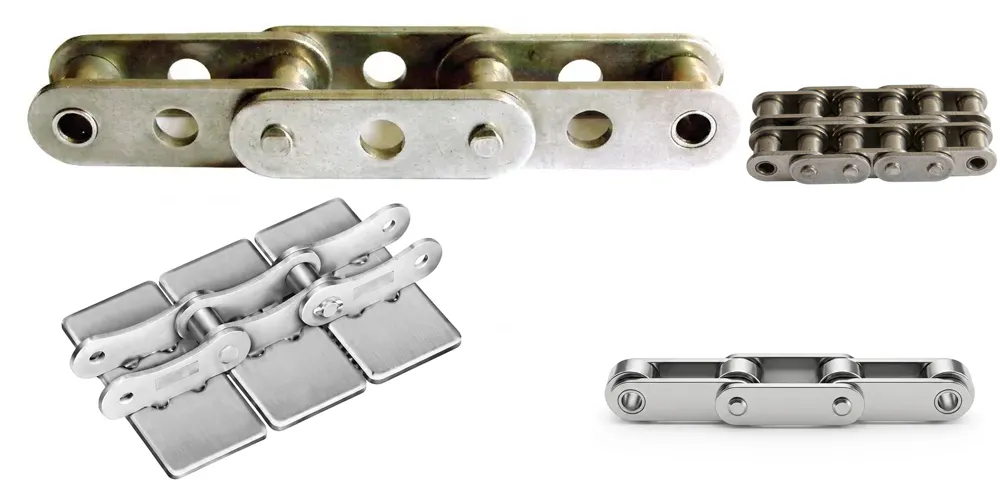
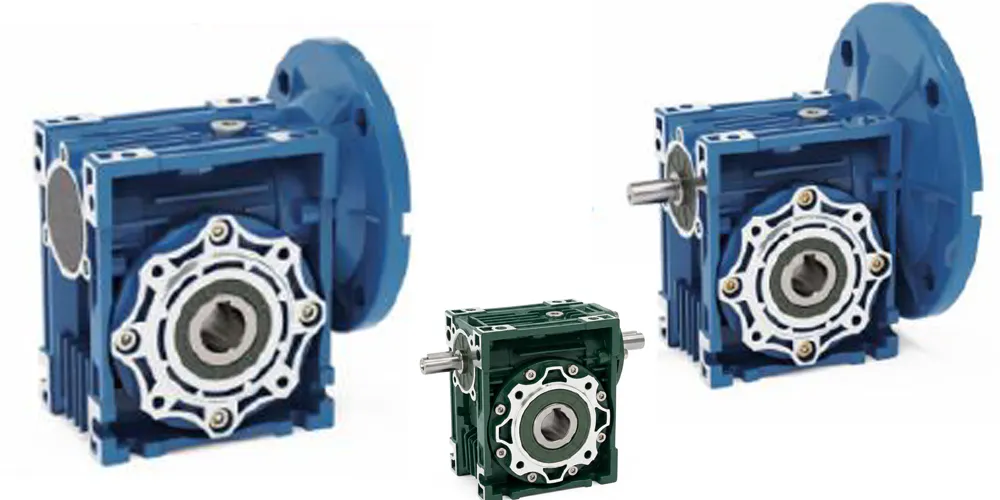
European Sprockets are a component in a chain drive system, not a standalone product. For buyers who want a complete drive train from a single verified supplier, we also produce matched roller chain and NMRV worm reducers that integrate directly with the 05B-1-2 European Sprockets range.
Roller Chain — Matched for 05B-1-2 European Sprockets
Every 05B-1-2 European Sprockets installation requires a roller chain with the matching 8 mm pitch, 3 mm inner width, and 5 mm roller diameter. Purchasing зірочки та ланцюги from the same supply source eliminates the dimensional tolerance stack-up that arises when chain and sprocket come from different manufacturers with slightly different interpretations of the same ISO standard. Our affiliated chain supply covers DIN/ISO, ANSI/ASME, and JIS pitch families for full industrial chains and sprockets europe factory coverage.
NMRV Worm Reducers — Input Stage for European Sprockets
Where a motor needs speed reduction before driving a European Sprockets chain stage, NMRV worm reducers offer compact right-angle reduction in ratios from 5:1 to 100:1. The output shaft bore dimensions of standard NMRV units are designed to match the bore range of European Sprockets in this size class, making the reducer-to-sprocket interface straightforward without custom adapters. This combination — NMRV reducer output shaft connected directly to a 05B-1-2 European Sprockets drive sprocket — is a one-stop solution for conveyor heads, agitator drives, and similar moderate-torque industrial applications. The ability to source European Sprockets and reducer from a single supply point is a key part of our industrial sprockets & gears one-stop-supply proposition.
8. Про нас
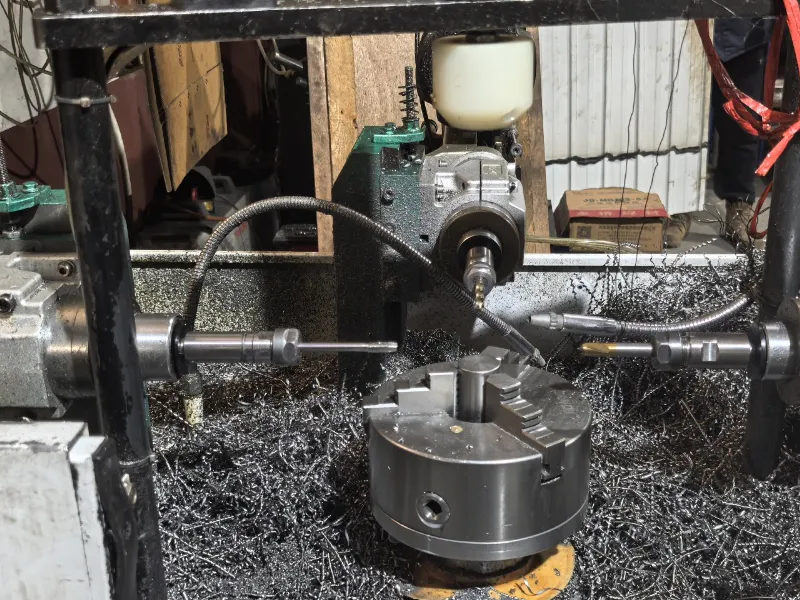
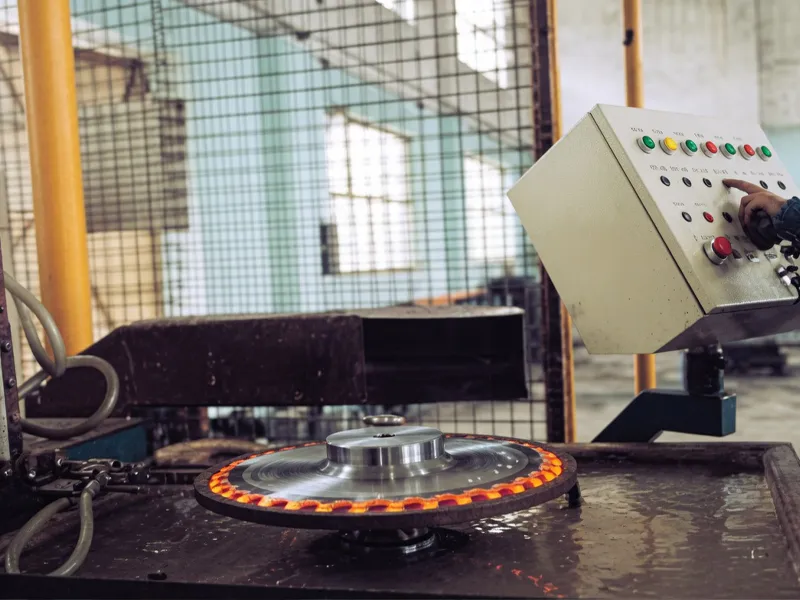
Since 2010, we have built more than a decade of focused manufacturing expertise in precision power transmission components — the experience base that underpins every unit we ship. Our production facilities are purpose-equipped for sprockets and gears, running modern CNC hobbing and machining centres that maintain tooth profile tolerances to DIN quality grade levels across every production batch. We do not outsource critical machining: every sprocket tooth is cut, inspected, and documented on our own controlled equipment, which gives us complete accountability for dimensional quality on every shipment to Europe, Colombia, and worldwide markets.
Our product portfolio is structured around three major roller chain sprocket standards — European DIN/ISO, American ANSI/ASME, and Asian JIS — and a comprehensive range of gears conforming to DIN 782, covering spur gears, bevel gears, and racks. Customers sourcing gears and sprockets across multiple global standards draw all three from a single supplier without the inconsistency risks of multi-source procurement. Tooth profile accuracy for sprockets is verified per DIN 8187, ANSI B29.1, or JIS B 1801 as applicable, and gear tooth accuracy is documented against DIN 3961 / ISO 1328 quality levels.
Семінар
Часті запитання
Редактор: PXY