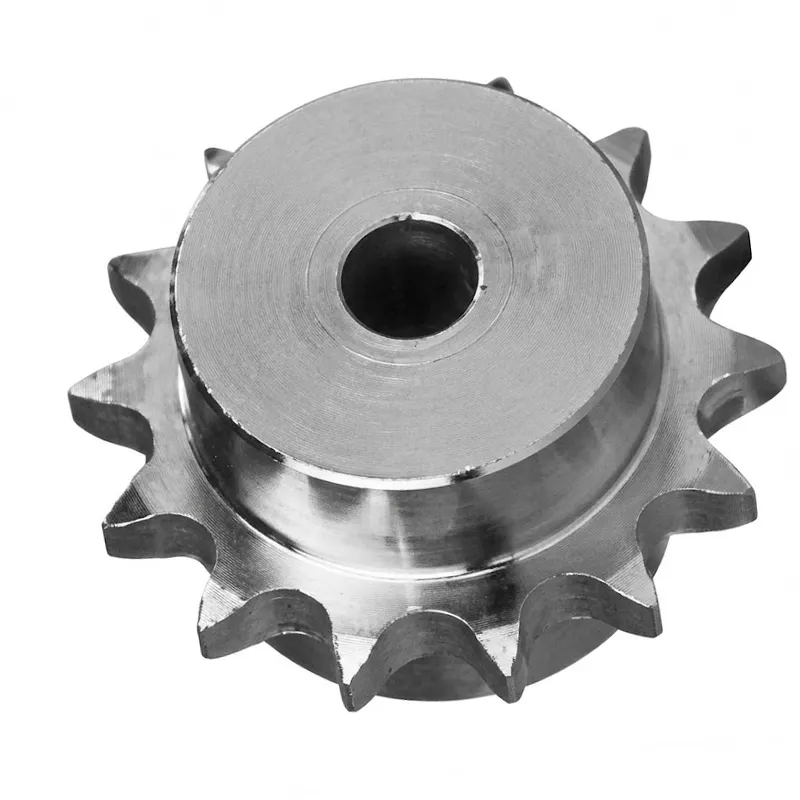
EP ⌀0.75″ американдық жұлдызшалы дөңгелек — №100 ANSI сериясы
Unlike European DIN 8187-based sprockets — which use a metric pitch directly expressed in millimetres — the American sprocket system uses this code-number shorthand that is immediately familiar to mechanical engineers and maintenance technicians trained in the ANSI framework.
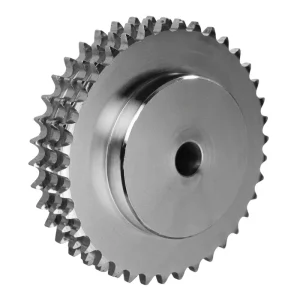
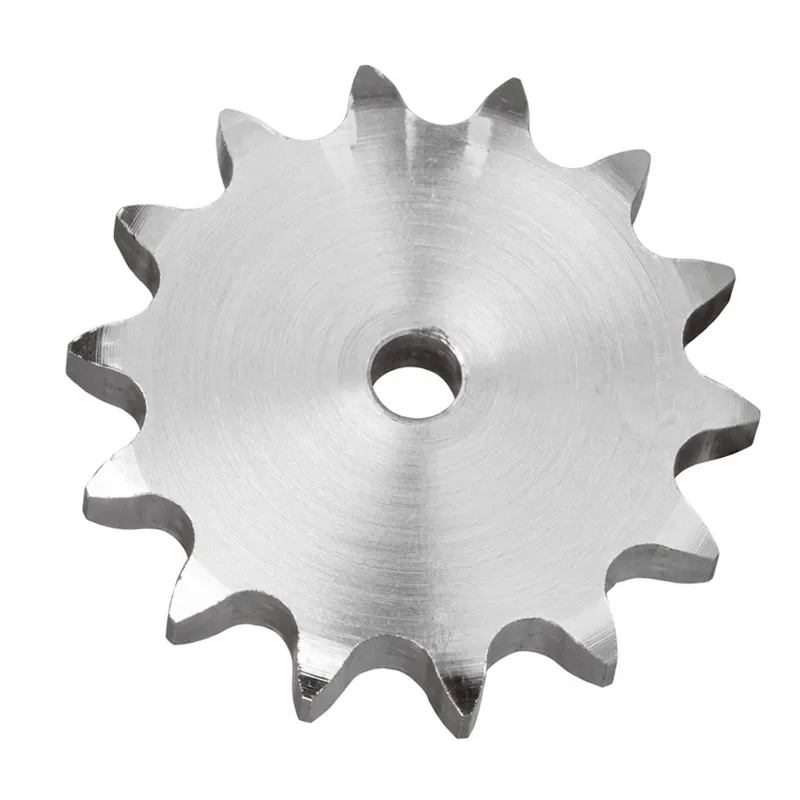
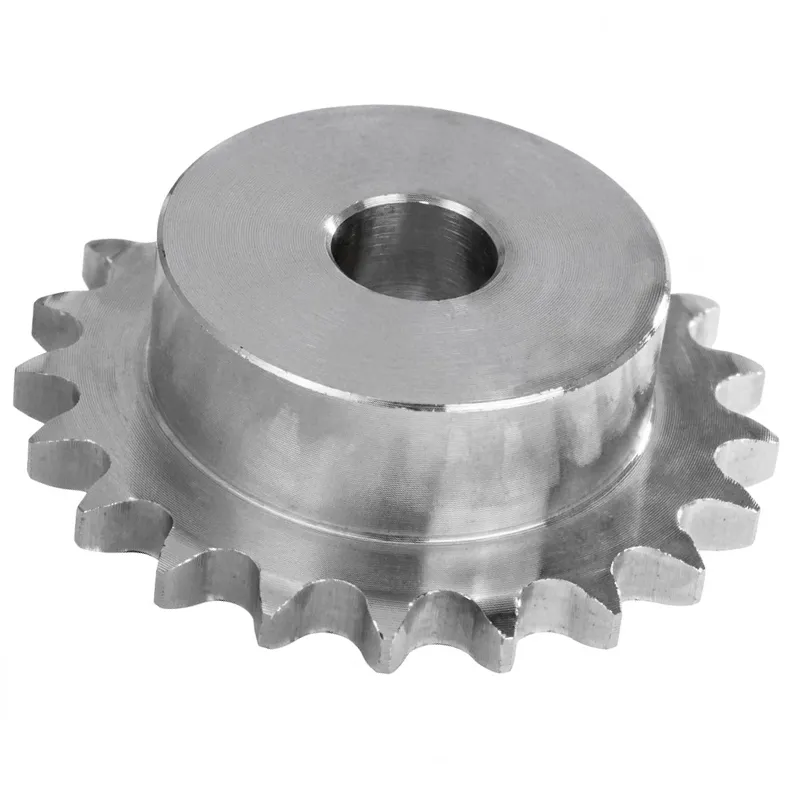
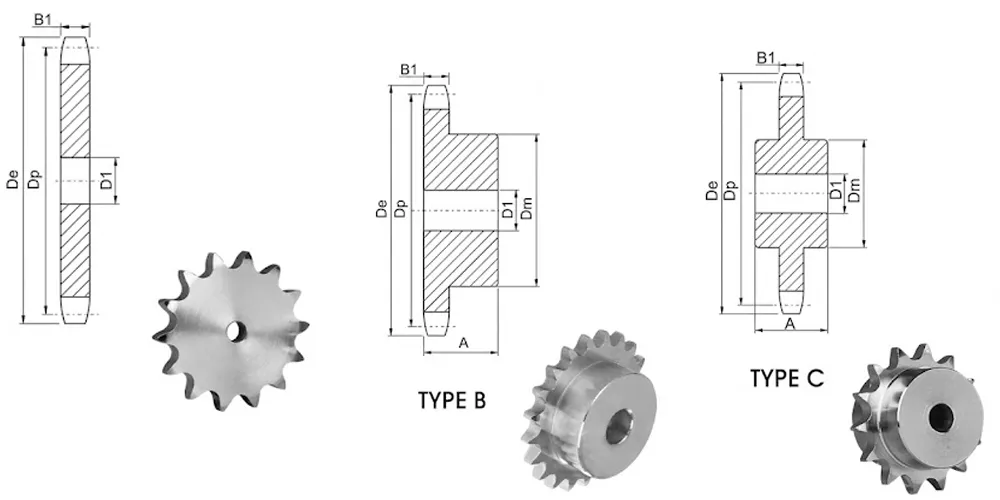
Three hub construction types are offered across the No.100 American sprocket range. Type A provides a simple through-bore configuration with a solid plate hub — straightforward to install on a clean shaft end with a standard keyway and setscrew. Type B introduces an extended hub boss with a defined setscrew location and, on selected tooth counts, a recessed groove (marked ★ in the bore table) that provides clearance for the chain inner link plate behind the sprocket face — an engineering detail specific to ANSI-standard American sprocket design that helps prevent interference between the chain side plate and the sprocket hub in tight installations. Type C takes the hub extension further, accommodating larger shaft diameters and longer keyed engagement lengths needed for high-torque, large-shaft drive applications. Each American sprocket type is dimensionally defined by the Dm (hub outer diameter) and A (hub width) values listed in the product table, along with the maximum D1 bore for the given hub type and tooth count.
The tooth count range of 7 through 96 gives this American sprocket family a span from compact high-speed pinion drives — Z=7 with a tip circle of just 3.350″ — through to large slow-speed driven wheels at Z=96 with a tip circle of 38.930″. The American sprocket part numbering in this series follows the pattern: 100A07 (Type A, 7 teeth), 100B08 (Type B, 8 teeth), 100C54 (Type C, 54 teeth), and so on — providing an unambiguous identification system that links directly to the ANSI chain number, hub type, and tooth count without reference to a separate catalogue code.
EP ⌀0.75" American Standard Sprocket — No.100 ANSI Series
The EP No.100 American Sprocket series is a fully ANSI B29.1-compliant roller chain sprocket built around the No.100 chain standard: 1-1/4" (31.75 mm) pitch, 0.750" (19.05 mm) roller diameter, and a tooth width B1 of 0.692" (17.58 mm). As one of the heavier-duty American sprocket families in the standard ANSI pitch sequence, the No.100 occupies a torque tier well above the lighter No.40, No.50, and No.60 families while remaining more manageable in overall drive size than the No.120 and larger alternatives. For mechanical engineers specifying American sprocket components for conveyors, agricultural drives, and industrial transmission systems in the United States, Canada, Colombia, and other markets where ANSI B29.1 is the default procurement standard, the No.100 American sprocket delivers the chain engagement geometry, hub configuration variety, and dimensional traceability that robust industrial drive design demands.
Three hub construction types — Type A (simple through bore), Type B (flanged hub with setscrew provision), and Type C (extended hub for heavy-bore and large-shaft applications) — are offered across a tooth count range of 7 through 96. This broad scope allows designers to cover both compact high-speed drives at the low tooth end and large-diameter slow-speed conveyor heads at the high tooth end, all within one American sprocket chain standard. Stock bore and custom OEM configurations are available from one qualified American sprocket manufacturer, eliminating the split-supplier risk that arises when standard and engineered components come from separate sources.
1. Technical Specification Parameters
Dimensional table for EP No.100 American Standard Sprocket. De = tip circle ("); Dp = pitch circle ("); D1 = max bore; Dm = hub OD; A = hub width. ★ = recessed groove in hub for chain clearance. All bore values in inches.
| Teeth | De (") | Part No. | Type | D1 (") | D1 Max (") | Dm (") | A (") | Wt (lb) |
|---|---|---|---|---|---|---|---|---|
| 7 | 3.350 | 100A07 | A | 1 | — | — | — | 1.2 |
| 8 | 3.770 | 100B08 | B | 1 | 1-1/4" | 2-7/16★ | 1/8 | 2.3 |
| 9 | 4.180 | 100B09 | B | 1 | 1-5/8" | 2-13/16★ | 1/8 | 3.2 |
| 10 | 4.600 | 100B10 | B | 1 | 1-7/8" | 3-1/4★ | 1/8 | 4.1 |
| 11 | 5.010 | 100A11 | A | 1-1/4" | — | — | — | 2.5 |
| 12 | 5.420 | 100A12 | A | 1-1/4" | — | 4★ | 1/8 | 3.0 |
| 13 | 5.820 | 100A13 | A | 1-1/4" | — | 3-5/8 | 1/8 | 3.5 |
| 15 | 6.630 | 100A15 | A | 1-1/4" | 3" | 4-1/2 | 1-3/4 | 4.7 |
| 16 | 7.030 | 100A16 | A | 1-1/4" | 3" | 4-1/2 | 1-3/4 | 5.4 |
| 18 | 7.840 | 100A18 | A | 1-1/4" | 3" | 4-1/2 | 1-3/4 | 7.0 |
| 20 | 8.640 | 100A20 | A | 1-1/4" | 3" | 4-1/2 | 2 | 8.8 |
| 22 | 9.440 | 100A22 | A | 1-1/4" | 3" | 4-1/2 | 2 | 10.5 |
| 25 | 10.650 | 100A25 / 100B25 | A/B | 1-1/4" | 3-5/16" | 4-1/2 | 2 | 13.9 |
| 30 | 12.640 | 100A30 / 100B30 | A/B | 1-1/4" | 3-5/16" | 5 | 2 | 20.1 |
| 35 | 14.640 | 100A35 / 100B35 | A/B | 1-1/4" | 3-5/16" | 5 | 2-1/2 | 27.2 |
| 40 | 16.630 | 100A40 / 100B40 | A/B | 1-1/4" | 3-5/16" | 5 | 2-1/2 | 36.0 |
| 45 | 100B45 | 18.630 | B | 1-1/2" | 3-5/16" | 5 | 2-1/2 | 47.0 |
| 48 | 100B48 | 20.020 | B | 1-1/2" | 4" | 6 | 2-1/2 | 66.0 |
| 54 | 100C54 | 22.210 | C | 1-1/2" | 4" | 6 | 3-1/4 | 78.0 |
| 60 | 100C60 | 24.600 | C | 1-1/2" | 4" | 6 | 3-1/4 | 89.0 |
| 70 | 100C70 | 28.580 | C | 1-1/2" | 5-1/4" | 7 | 3-1/4 | 125 |
| 80 | 100C80 | 32.570 | C | 1-1/2" | 5-1/4" | 7 | 3-1/4 | 151 |
| 90 | 100C90 | 36.550 | C | 1-1/2" | 5-1/4" | 7 | 4-1/2 | 184 |
| 96 | 100C96 | 38.930 | C | 1-1/2" | 5-1/4" | 7 | 4-1/2 | 203 |
★ = Recessed groove in hub for chain clearance. Maximum bores shown accommodate standard keyseat and setscrew over keyseat. Slightly larger bores are possible with no keyseat, shallow keyseat, or setscrew at angle to keyseat. Contact us for the complete tooth count listing (7 through 96).
2. Five Key Advantages of the No.100 American Sprocket
Every No.100 American sprocket in this range is manufactured and dimensionally verified to ANSI/ASME B29.1 — the authoritative American standard for roller chain and sprocket geometry. This conformance is not self-certified: tooth profile tolerances, bore fits, and hub dimensions are all measurable against the standard's published acceptance criteria. For procurement teams in the United States, Canada, and Colombia sourcing American sprocket components for machinery that must meet ANSI documentation requirements — whether for insurance inspection, OEM warranty compliance, or facility safety audits — this ANSI conformance provides the documentation basis needed without additional certification overhead. Competing products claiming ANSI compliance without documented inspection records may not satisfy this standard.
Type A, Type B, and Type C hub constructions in the No.100 American sprocket range address genuinely different shaft retention requirements. Type A suits clean-bore installations on lighter shafts at low-to-mid tooth counts. Type B extends the hub to accommodate larger shaft diameters and adds the recessed groove (★) that prevents chain inner-plate interference in compact housings — an engineering detail specific to the American standard that the European equivalent does not require. Type C provides the largest hub OD and axial width for high-torque applications on substantial shafts, covering the Z=54 to Z=96 range where the hub must withstand combined bending and torsional loads from heavy conveyor chain tension. This three-type hub system is a practical engineering tool, not simply a visual choice.
The No.100 American sprocket series covers tooth counts from 7 through 96 — a span that delivers speed ratios from near 1:1 up to 13:1 or beyond within a single ANSI chain number. A machine designer specifying american sprockets for an agricultural conveyor in Colombia can select both the high-speed PTO drive sprocket (Z=11–14) and the slow-speed driven roller sprocket (Z=80–96) from the same No.100 range, without switching chain standards between stages. This eliminates the stocking complexity of managing multiple chain pitches in the field, which matters particularly in remote agricultural operations where spare parts logistics are a genuine constraint. American sprocket sizes in this range are clearly coded by part number for unambiguous identification.
Tooth profile accuracy in an American sprocket directly governs how evenly the chain roller seats into each tooth pocket, how quietly the drive runs, and how quickly the tooth flanks wear under load. Production on CNC machining centres holds tooth geometry to ANSI B29.1 quality levels — including the seating curve radius calibrated for a 0.750" roller — across the full No.100 tooth count range. This machine-controlled consistency is the correct answer to a frequently asked question: what is the best steel for sprockets? The answer is not just material grade — it's material plus machining accuracy. Even premium steel produces a poor drive component if tooth profile tolerance is inadequate.
Standard tooth count and bore configurations in the No.100 American sprocket range are held as stock for prompt shipment — meeting urgent replacement needs without the lead time of a full production run. Custom OEM configurations — non-standard bore diameters, keyway modifications, alternative hub lengths, and surface treatments — are produced using the same CNC tooling with full dimensional documentation for incoming inspection. For custom sprocket manufacturer projects where the component must exactly match a specific shaft geometry or machine drawing, the custom supply process produces components that are dimensionally traceable to both the drawing and the ANSI B29.1 standard simultaneously. This integrated model avoids the quality inconsistency that arises when standard and custom components come from separate sprocket manufacturers.
3. How the No.100 American Sprocket Works
An American sprocket transfers power through direct positive engagement between its teeth and the rollers of a matching roller chain. As the drive shaft rotates the driving sprocket, the tooth flanks push each chain roller forward in sequence, pulling the chain and driving the output shaft. Because engagement is mechanical and positive — not frictional — there is no slip, and the theoretical transmission efficiency of a properly lubricated roller chain and American sprocket pair exceeds 98% per stage. This positive engagement is why chains and sprockets remain the preferred transmission method in agricultural equipment, heavy industrial conveyors, and mining auxiliary drives where variable loads, reversing, and precise speed ratios must coexist.
Tooth geometry of the No.100 is governed by ANSI B29.1. The tooth seating curve is designed specifically for the 0.750" (19.05 mm) roller diameter of #100 chain: as each roller enters the tooth pocket from the approaching-side tooth flank, it rides along the seating arc and drops cleanly to the tooth bottom, distributing contact load across the arc rather than concentrating it at a point. The tooth width B1 = 0.692" provides the correct lateral clearance for the chain inner link plate to pass without binding, while maintaining sufficient tooth face width for reliable roller guidance. The 1-1/4" pitch means each tooth pitch on the American sprocket corresponds to exactly 1-1/4" (31.75 mm) of chain link — a pitch defined in the ANSI numbering system where the first digit of the chain number indicates the pitch in eighths of an inch.
The recessed groove in the hub face (★, present on selected Type B and larger American sprocket variants) is a feature specific to ANSI American sprocket design. In installations where the chain inner link plate would otherwise contact the hub face behind the tooth — which occurs when the sprocket-to-shaft clearance is tight — the recess provides the clearance needed to prevent friction-induced wear on the inner link plate back face. This is not a visual detail; it is a dimensional engineering provision that prevents a common failure mode in compact American sprocket drive housings.
4. Material and Surface Treatment
The standard production material for the No.100 American sprocket is C45 medium-carbon steel — a grade that has been the workhorse of roller chain sprocket manufacturing across both American and European standards for decades. C45 delivers adequate tensile strength (600–800 MPa normalised), excellent machinability for CNC tooth-profile cutting, and the surface hardness response to induction hardening that extends tooth flank life in heavily loaded chain drives. In the No.100 range, where the 1-1/4" pitch chain carries significantly higher strand loads than lighter ANSI families, case hardening at the tooth flanks (typically 50–58 HRC) substantially extends the service interval before tooth wear requires sprocket replacement. The core remains in its tougher normalised condition to resist impact loading and hub fatigue cracking — particularly important for Type C hub designs under sustained heavy conveyor loads.
When asked what sprocket is better — aluminum or steel — the answer for the No.100 American sprocket in most industrial applications is unequivocally steel. Aluminum American sprockets can reduce rotating mass in high-speed, low-torque applications, but the No.100 pitch class is most commonly specified precisely because the application exceeds what lighter-pitch chains can handle — and those applications typically also involve loads that would deform aluminum teeth unacceptably within short operating hours. Steel sprockets and gears remain the standard recommendation for any No.100 American sprocket in continuous industrial service. The sole practical argument for aluminum in an American sprocket of this pitch class is inertia reduction in robotics or precision motion indexing — a niche that represents a small fraction of this product's deployment base.
Stainless steel sprockets & gears are available in AISI 304 or 316L for No.100 American sprocket installations in corrosive environments — food processing facilities in Colombia and the US that require wash-down resistance, offshore equipment handling operations, or chemical plant conveyors where carbon steel would suffer unacceptable surface degradation. Black oxide treatment on C45 steel blanks for the mild corrosion protection and visual identification advantage it provides in dry-indoor environments. Custom surface treatments including electroless nickel plating and zinc phosphate coating are available for specific application requirements.
C45 Steel (Standard)
The definitive steel stock sprocket material; induction-hardenable tooth flanks
AISI 316L Stainless
Best corrosion resistance for stainless steel sprockets & gears in wet or chemical environments
AISI 304 Stainless
General corrosion-resistant American sprocket for moderate wash-down
Black Oxide
Mild protection; black surface for identification in dry-indoor American sprocket drives
5. Қолдану сценарийлері
The No.100 American Standard sprocket occupies a torque tier that positions it in mid-to-heavy industrial applications — well above the capacity of lighter ANSI families while remaining more manageable in drive dimensions than the No.120 and larger pitches. Its three hub types and 7-to-96 tooth count range make it one of the more versatile entries in the american standard sprockets catalogue.
Combine harvester elevators, grain auger drives, forage chopper main chain stages, and cotton picker power trains across the US farm belt and Colombian agribusiness operations commonly use No.100 American sprocket components. The 1-1/4" pitch delivers the torque capacity these drives need at the moderately high chain speeds typical of PTO-connected equipment, and the stock bore Type A American sprocket at lower tooth counts handles the drive pinion side of these transmissions efficiently. In Colombia's expanding mechanised agriculture sector — particularly in the Cauca and Valle del Cauca regions — American sprocket specifications from US-origin OEM machinery are the standard that local repair workshops and import spare-parts distributors must match. Roller chain sprocket replacement in this sector is a high-frequency maintenance activity where dimensional conformance to ANSI B29.1 is the acceptance criterion.
Heavy-duty industrial conveyors in aggregate processing, cement production, steel handling, and distribution centre heavy logistics specify No.100 American sprocket components at drive head drums and take-up shafts. The Type B and C hub constructions handle the shaft diameters typical of large drum shafts — 1-1/2" minimum bore up to 5-1/4" D1 maximum at the highest tooth counts — while the Dm and A dimensions provide the hub engagement length needed to transmit the sustained high torque of fully-loaded conveyors without hub slip or shaft fretting. The double chain sprocket gear configuration, using two No.100 units in parallel on the same shaft, is a common approach to further increasing torque capacity on very heavy conveyor head drives without changing the chain pitch.
Crusher feed conveyors, rock screening plant drive stages, and underground haulage auxiliary drive chains in mining operations use industrial sprockets and gears in the No.100 American sprocket pitch class for main drive applications. The C45 steel construction with induction hardening provides the surface wear resistance needed under sustained abrasive-dust and heavy-load conditions, while the Type C hub's extended axial width distributes the hub mounting load across a longer shaft engagement than lighter hub types can achieve. Colombian mining operations in the Andean departments of Boyacá, Cesar, and Antioquia increasingly specify ANSI-standard American sprocket components for equipment imported from North American manufacturers and supported by parts procurement through Colombian industrial distributors.
Can seaming lines, bottling conveyors, bulk ingredient handling systems, and pasteurisation line chain drives in food and beverage manufacturing plants use No.100 American sprocket components where the drive torque requirements exceed lighter-pitch ANSI families. For wash-down-zone applications in US and Colombian food processing plants — where USDA, FDA, or INVIMA regulations require hygienic material specifications — stainless steel sprockets & gears in 316L are specified for American sprocket units in direct product-contact or wash-down-exposure zones. The ANSI B29.1 conformance of these American sprocket components ensures interchangeability with equipment from multiple US OEM machinery manufacturers, simplifying spare-parts management across multi-brand food processing facility equipment fleets.
Pumpjack walking beams, rotary drilling rig drawworks auxiliary drives, and wellhead service equipment use American sprocket components in the No.100 pitch class for applications where the drive must handle both high torque and significant shock loading from the stop-start cycle of well servicing operations. The heavy hub constructions in Type B and C American sprocket variants provide the shaft support stiffness needed to prevent hub rocking under reversing loads, while the bore range in the largest Type C units accommodates the large-diameter shafts common in oilfield mechanical drive systems. This application sector spans the US production regions and Colombia's Llanos Orientales and Magdalena Medio oil fields, where ANSI-standard American sprocket components are the default specification.
Biomass feed systems, chain grate stoker drives, and ash handling conveyors in power generation facilities specify No.100 American sprocket components for their combination of pitch-to-torque efficiency and the dimensional interchangeability that reduces inventory management complexity across large facilities. The large-diameter Type C American sprocket units at high tooth counts — Z=80 and Z=96, with tip circles of 32.570" and 38.930" respectively — are particularly relevant for slow-speed chain grate drives where the sprocket turns at very low RPM under sustained high chain tension. The ANSI B29.1 reference also simplifies procurement approval in utility facilities that maintain approved supplier lists based on specific ANSI conformance documentation.
6. Regulatory and Standards Context by Region
Procurement of No.100 American Standard sprocket components for cross-border industrial machinery projects requires understanding how ANSI B29.1 connects with each target market's regulatory and documentation requirements.
USA — ANSI/ASME B29.1 and OSHA
ANSI/ASME B29.1 is the governing standard for American sprocket and roller chain geometry in the United States. OSHA 29 CFR 1910.219 (Mechanical Power Transmission Apparatus) requires that chain drives on exposed machinery be guarded appropriately; the American sprocket itself must be dimensionally correct for the chain to function safely within the guarded drive. Machine builders submitting machinery for OSHA compliance inspection should include ANSI B29.1 conformity records for American sprocket components in their technical documentation package.
Colombia — ICONTEC, DIAN, RETIE, INVIMA
Imported American sprocket components enter Colombia under DIAN HS code 8483.40.90. ICONTEC adopts ANSI B29.1 as a reference standard for American standard chain sprockets in the Colombian technical documentation context. Electrically-driven conveyors incorporating the American sprocket must comply with RETIE electrical safety regulations. In food processing applications, INVIMA hygiene material requirements apply and support stainless steel American sprocket specification. ICA records may be needed when the American sprocket is installed in agricultural processing machinery imports.
EU — Machinery Regulation and ANSI Cross-Reference
Machinery placed on the EU market must carry CE marking based on the Machinery Directive 2006/42/EC (or Machinery Regulation (EU) 2023/1230 from 2027). American sprocket components used in CE-marked machinery must be dimensionally documented in the Technical File. ANSI B29.1 is not a harmonised EU standard, but it is an internationally recognised industry norm that EU machinery designers routinely reference in Technical Files for machines intended for export to North American and Latin American markets. EU buyers who specify american metric sprocket conversions (ANSI dimensions stated in metric equivalents) can do so using the mm equivalents of ANSI values.
Canada — ASME B29.1 Adoption
Canada uses ASME B29.1 as the basis for American sprocket and roller chain standards, essentially mirroring the US ANSI adoption. Canadian provincial workplace safety legislation (e.g. Ontario OHSA, Alberta OHS Act) requires mechanical drive guards on exposed American sprocket chain drives in the same way US OSHA does. Canadian machinery importers from Colombia and other Latin American markets should verify that imported equipment specifying American sprocket components references ASME B29.1 in its documentation for provincial safety authority inspection acceptance.
ANSI vs European Standard — Key Difference
A No.100 American sprocket (1-1/4" pitch) is not interchangeable with a European DIN 8187 sprocket of the same nominal pitch value. The difference between sprockets and gears aside, even within the sprocket family, ANSI and DIN roller geometry and tooth profile specifications differ. The american standard vs new american standard distinction within ANSI refers to updated bore tables and weight values in recent editions of B29.1 — not to any fundamental incompatibility between older and newer American sprocket versions of the same tooth count and type.
RoHS and REACH — Surface Treatments
Surface treatments applied to steel American sprocket blanks — including black oxide, zinc phosphate, and electroless nickel — must comply with EU RoHS Directive 2011/65/EU and REACH Regulation EC 1907/2006 for products supplied into EU-market machinery. Our American sprocket surface treatment processes use fully RoHS-compliant chemistries. SVHC substance declarations are available in the compliance documentation package on request for buyers whose own product compliance obligations require American sprocket component REACH records.
7. Compatible Products — Complete Drive System
The No.100 American sprocket operates as part of a chain drive system. We supply the matched chain and speed-control components that connect to this American sprocket, providing a single verified source for the complete drive assembly.
Roller Chain — Matched ANSI #100
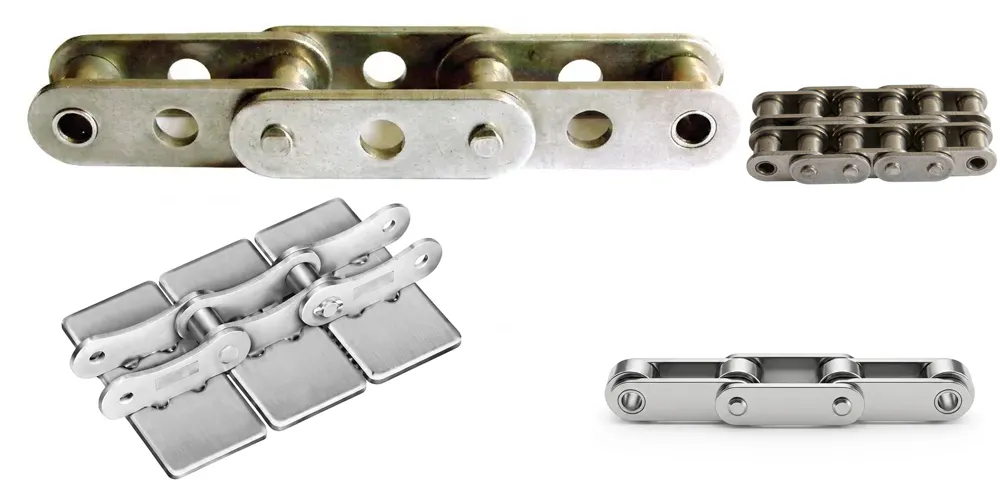
Each No.100 American sprocket installation requires ANSI #100 roller chain: 1-1/4" pitch, 0.750" roller diameter, and inner link dimensions conforming to ANSI B29.1. Sourcing sprockets and chains from a single verified supplier eliminates the dimensional tolerance inconsistencies that arise when the chain and American sprocket come from manufacturers with different interpretations of the ANSI standard acceptance range. Our industrial chains and sprockets supply network covers ANSI/ASME, DIN/ISO, and JIS pitch families for full system compatibility.
NMRV Worm Reducers — Input Speed Control
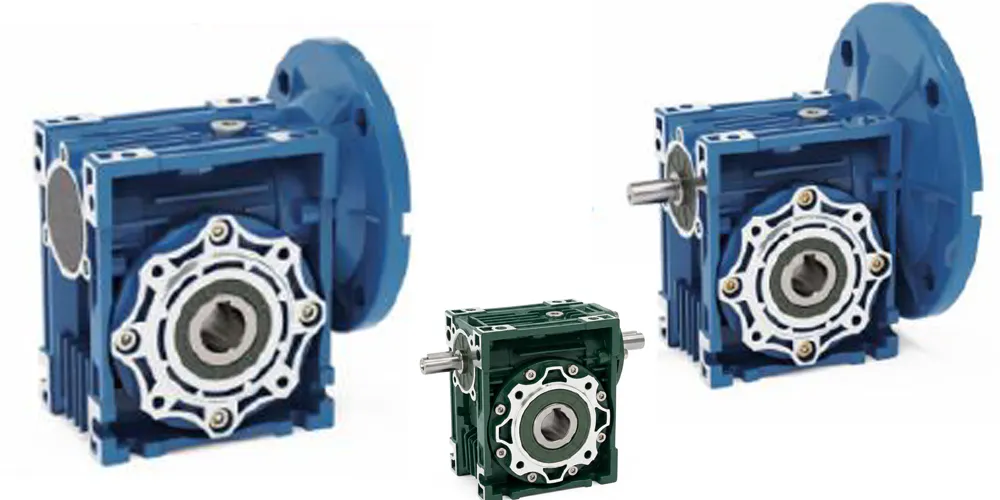
Where the motor output speed must be reduced before driving the No.100 American sprocket chain stage, NMRV worm gear reducers provide right-angle compact speed reduction at ratios from 5:1 to 100:1. Standard NMRV output shaft bore dimensions are compatible with the bore range of stock-bore No.100 American sprocket at commonly specified tooth counts, making the reducer-to-sprocket shaft interface straightforward without custom adapters in most standard installations. This reducer-plus-American-sprocket combination is a practical one-stop solution for conveyor head drives, agitator inputs, and main drive stages in industrial and agricultural machinery across the US, Canada, and Colombia.
8. About Us
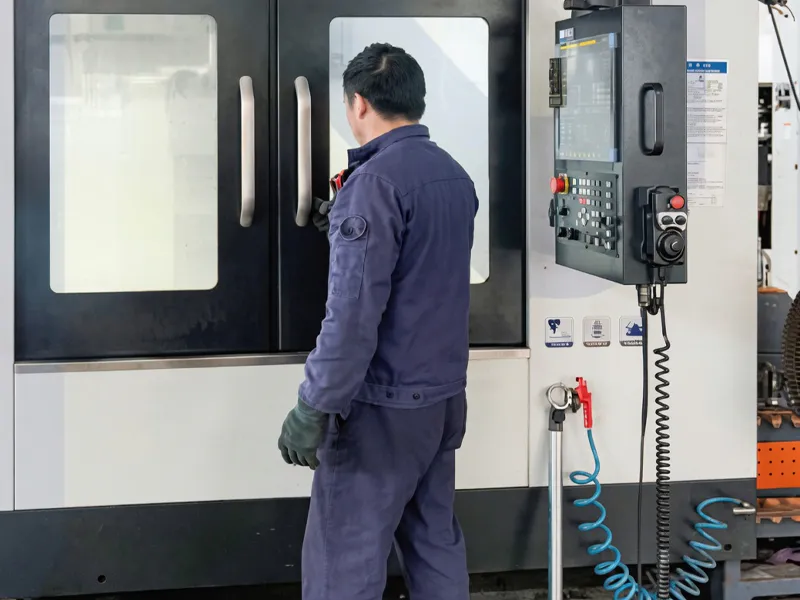
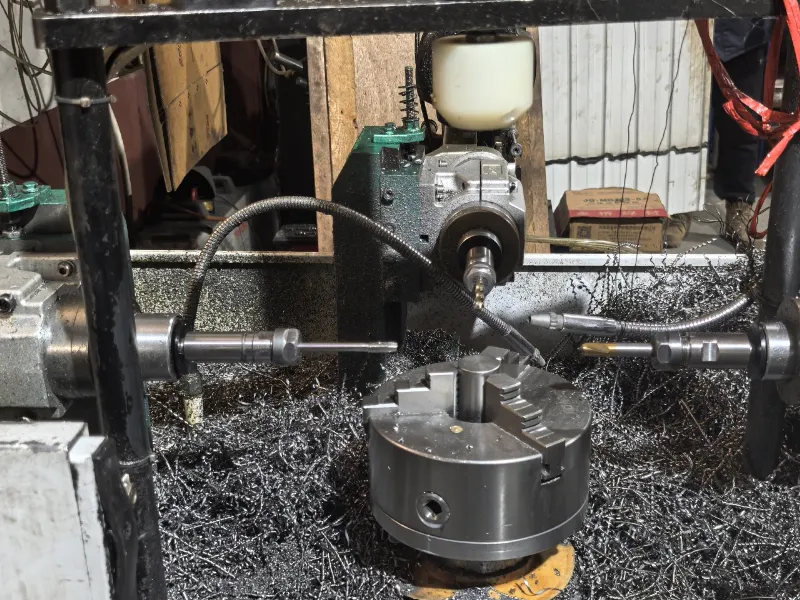
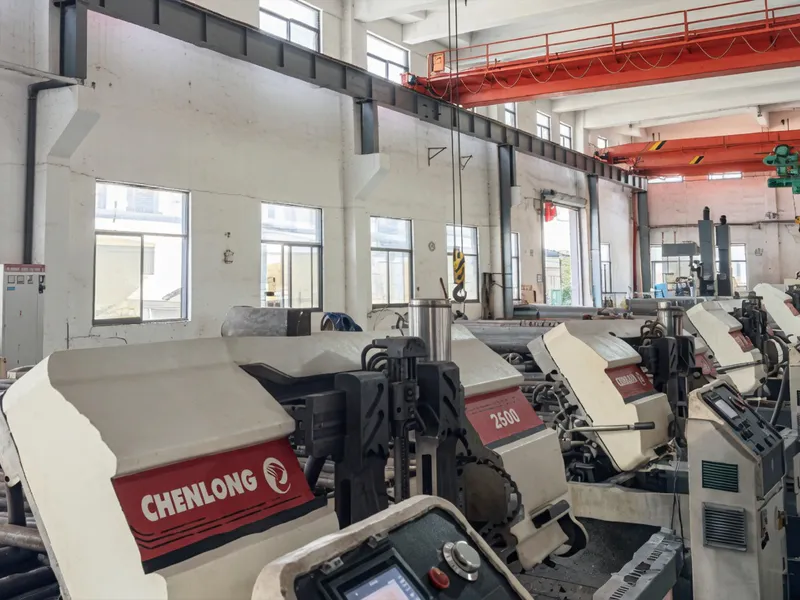
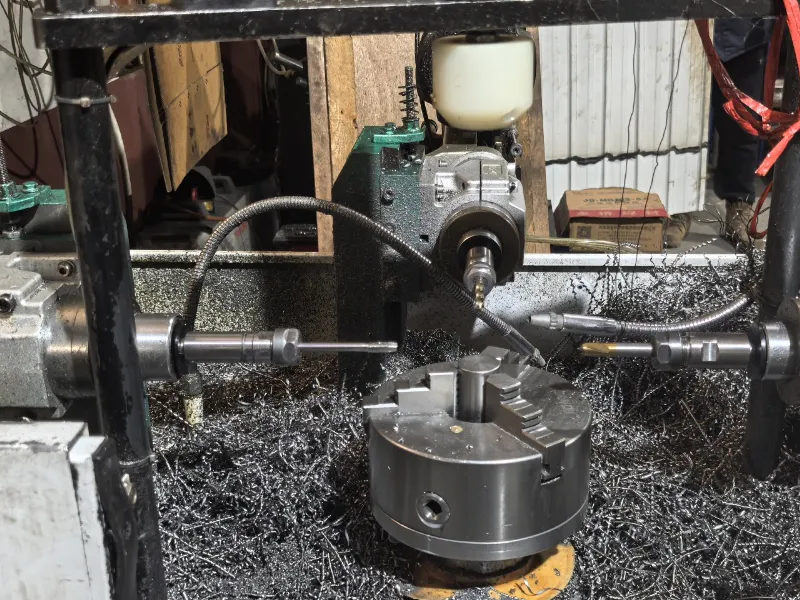
Founded in 2010, we have spent more than fifteen years developing precision manufacturing capability specifically for roller chain sprockets and gears. Our production facility runs CNC hobbing and machining centres dedicated to sprocket tooth-profile cutting and bore finishing, holding dimensional tolerances to DIN quality grade levels and ANSI B29.1 acceptance criteria — depending on which standard the American sprocket in question is built to. Every sprocket tooth is cut, measured, and documented on our own controlled equipment: we do not subcontract the primary machining, which means our customers have unbroken traceability from incoming steel bar stock through to the final dimensional inspection record on every shipment.
Our product range spans the three principal international roller chain standards — American ANSI/ASME, European DIN/ISO, and Asian JIS — plus a full gear range in spur, bevel, and rack formats conforming to DIN 782. Buyers sourcing industrial sprockets and gears across multiple global standards can deal with one qualified sprocket manufacturer rather than managing separate supplier relationships for each standard family. ANSI B29.1 tooth profiles are verified at production; DIN 8187 profiles for European sprocket units are verified to the European norm. Gear tooth accuracy is documented to DIN 3961 / ISO 1328 levels. Stock items in common configurations are available for same-week dispatch; custom OEM variants with modified bores, extended hubs, and specific surface treatments are handled by our engineering team with full dimensional documentation packages for incoming inspection.
We serve industrial buyers in the United States, Canada, Colombia, Mexico, Germany, Spain, and growing markets in Southeast Asia. Whether you need american sprockets for sale in standard stock configurations, require a custom sprocket manufacturer quote for an OEM-specific hub geometry, or want to evaluate american standard chain sprockets across multiple bore and hub type options — our technical and commercial teams respond with accurate specification confirmation and lead-time data without delay.
Шеберхана
Жиі қойылатын сұрақтар
Редактор: PXY